
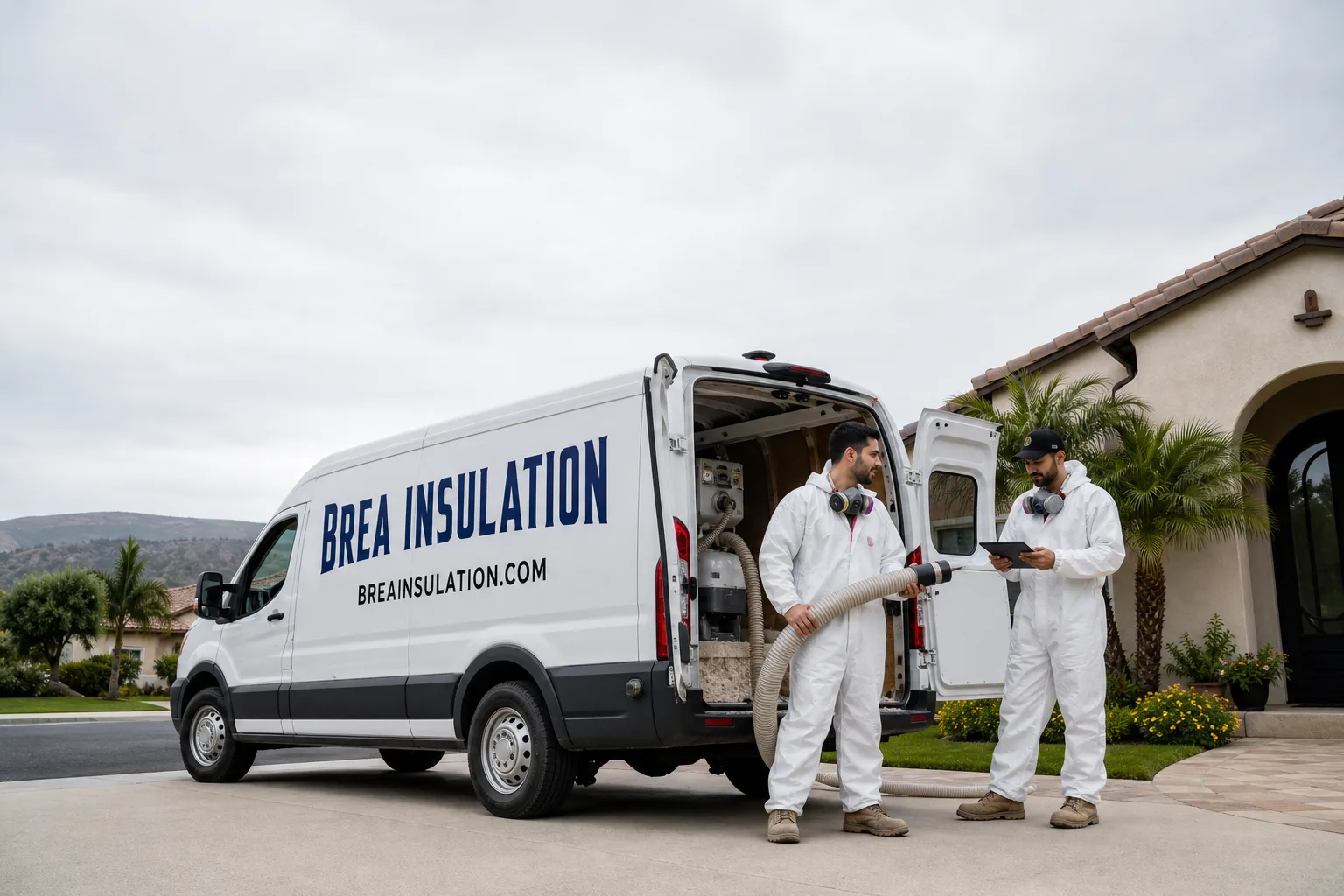
Fast, Reliable Spray Foam Insulation Across Crestline
Spray foam insulation in Crestline runs $2.90 to $6.80 per board foot installed, with a typical 1,000-square-foot closed-cell rim-and-crawl job landing between $3,800 and $7,200. Our crews are in Crestline weekly, usually within 48 hours of your call, and we’re the crew that actually understands what a 4,500-foot mountain cabin needs that a flatland home doesn’t. If your A-frame or 1960s chalet is leaking heat through gaps that fiberglass never touched, call (866) 858-4033 and Phil Darnell will walk you through what we’d do before we ever send a truck up the hill.
This isn’t generic insulation talk. Crestline’s housing stock is built different. Most of the cabins up here went up between the 1920s and 1970s with single-pane windows, wood siding, inconsistent wall cavities, and attics so shallow you can barely turn around in them. Spray foam is often the only material that can actually work in those conditions. Spray Foam Insulation from Brea Insulation means closed-cell or open-cell foam applied by a dedicated insulation contractor, not a handyman squeezing it in between roofing jobs.
Why Brea Insulation Is Crestline’s Preferred Spray Foam Insulation Company
We carry eight manufacturer lines, including Demilec and Icynene closed-cell and open-cell formulations, because we don’t stock one brand and hope it fits. When we quote a Crestline job, we’re picking a foam that handles snow-load cold, summer wildland-urban-interface heat, and the occasional rodent the mountain never runs out of. Insulation is all we do, so our techs know the difference between a foam that bonds to 60-year-old wood siding and one that peels off after the first freeze-thaw cycle.
Crestline homeowners and property managers call us for exactly this reason. You’re not getting a crew that mostly does drywall and “also insulates.” You’re getting Phil Darnell’s team, which has spent years working the cabins and chalets around 92325, from the Lake Gregory side to the quiet roads off Daley Canyon and the switchbacks around Sawpit Canyon. Response time to Crestline runs 24 to 48 hours for standard estimates, and we schedule around vacation-rental turnover windows because we know you’re not always on-site.
The right insulation for your home, not just what’s easiest to install. That’s the whole point of carrying Owens Corning, Rockwool, Icynene, Demilec, CertainTeed, GreenFiber, and two more brands you’ve likely heard of. We match material to the actual problem in your specific Crestline house, not to whatever’s left in the warehouse.
Crawl Space Spray Foam Insulation in Crestline
Crawl Space Spray Foam Insulation in Crestline is the single most effective retrofit for the pier-and-beam cabins and older chalets that make up so much of the town’s housing stock, and it typically runs $3,200 to $6,400 for a full 1,200-square-foot crawl encapsulation. The job involves cleaning out whatever the last sixty years left down there, sealing the rim joists, and applying closed-cell foam to the foundation walls and band boards so cold air stops wicking up through your floors all winter.
Here’s the Crestline version of this problem: your crawl space freezes in January, thaws in April, and bakes dry from June to September. Then a dry winter sends rodents looking for warmth, and they tunnel through whatever batt insulation is down there. When you finally open the cabin for the holidays, the floors are ice-cold and the crawl smells like a nest. Closed-cell foam seals it all: air, moisture, and the pathway critters have been using for decades.
Rim Joist and Band Board Sealing
Most 1920s-through-1970s Crestline cabins have uninsulated rim joists, which means every outside wall sits on a gap that lets mountain air pour straight into the living space. We spray a closed-cell pass along the entire perimeter, which also stiffens the connection and helps with rodent exclusion. On a standard 1,000-square-foot cabin, this part runs $850 to $1,650.
Conditioned Crawl Encapsulation
For vacation rentals and second homes that sit empty for weeks between bookings, a full encapsulation installs a vapor barrier across the crawl floor and foam along the walls, turning the space into a semi-conditioned buffer. This stops the off-season pipe-freeze call most owners never want to get twice. Crestline jobs like this typically fall between $4,800 and $7,200 depending on crawl height and access.
Garage Spray Foam Insulation in Crestline
Garage Spray Foam Insulation in Crestline runs $2,400 to $5,300 for a typical two-car garage ceiling and shared wall, and it’s one of the first things we recommend for cabins where the garage sits under a bedroom or the attic above it is too shallow for blown-in work. The foam air-seals the ceiling, insulates the wall against the great outdoors, and keeps whatever heat your furnace makes from escaping through the biggest uninsulated box attached to your home.
We do a lot of garage work for Crestline owners who store vehicles, tools, and off-season gear up there and can’t figure out why the garage is freezing in December and an oven in July. The answer is usually simple: no air seal, no thermal break, and a builder in 1962 who didn’t plan for a mountain winter. Closed-cell foam on the ceiling and the wall facing the hill solves it.
Garage Ceiling Air Sealing
If your garage has habitable space above it, the ceiling cavity is a highway for heat loss and wildfire smoke infiltration. We spray a closed-cell layer that air-seals every gap and gives you a real thermal break between the garage and the room above. Crestline garages under bedrooms or bonus rooms commonly see energy-use drops of 15 to 20 percent after this one fix.
Shared Wall and Ember-Resistance Work
On the wildland-urban interface side of Crestline, we often spec a closed-cell foam with a thermal barrier on garage walls facing uphill or toward tree cover. This isn’t a fireproofing service, but closed-cell foam doesn’t provide the air channels that embers and smoke use to find a way into an open vent. For garages near the WUI line, we recommend coupling foam with checked vent screens and intact door sweeps.
Trusted Brands We Service in Crestline
We work with Crestline customers using Icynene and Demilec spray foam lines most often, because both make low-expansion and closed-cell formulations that perform well on mountain framing with unpredictable cavities. CertainTeed and GreenFiber stay in the rotation for hybrid jobs where a homeowner wants spray foam in the hard-to-reach spots and blown-in or batt material where it’s practical. Because we’re a dedicated insulation contractor with an eight-brand material bench, we keep local inventory and can usually start a Crestline job within the same week we quote it, not the same month.
Common Spray Foam Insulation Problems We See in Crestline Homes
- Spray foam applied over compromised batting. A lot of Crestline attics have original 1960s or 70s fiberglass that rodents have tunneled through or a burst pipe has soaked. If foam goes over that, it traps moisture and can’t bond, and the job fails inside one winter. We pull the bad material first, every time.
- Foam thickness sized for flatland winters. A crew from down the hill specs two inches of open-cell and calls it done. At 4,500 feet with below-freezing nights and real snow load, that’s underbuilt, and the homeowner wonders why the bedroom is still cold in February. We size for Crestline’s actual climate.
- No ember awareness near the WUI. Standard open-cell foam at open attic vents gives air a straight shot and does nothing for wildfire ember intrusion. On the Crestline parcels that back up to wildland, the spec needs to account for vent screening and closed-cell placement.
- Off-season damage nobody saw coming. Vacation-rental owners often find rodent damage or a pipe burst only after they arrive for a holiday weekend. By then, the attic insulation is gone or soaked. Our bids include an inspection-and-removal contingency, because on the mountain that’s not a surprise extra, it’s the norm.
Pricing for Spray Foam Insulation in Crestline, CA
Closed-cell spray foam in Crestline runs $2.90 to $4.60 per board foot. Open-cell runs $2.10 to $3.40. A typical rim-joist-only job on a small cabin falls around $1,200 to $2,100, while a whole crawl space encapsulation with rim sealing lands between $3,800 and $7,200. Garage ceiling work usually settles from $2,400 to $5,300 depending on square footage and whether we’re pulling old material first.
What moves the number: crawl space height (tighter spaces cost more in labor), foam thickness (we spec for Crestline winters, not Burbank winters), and the condition of whatever’s already in the cavity. Every quote is free. Call (866) 858-4033 and we’ll give you a real number after looking at the space, not a vague range that shifts on contract day.
We Also Serve Cities Near Crestline
Our tanks run from Lake Arrowhead to Muscoy on a regular schedule, and we handle spray foam work across San Bernardino and Highland every month. If you own a cabin in Crestline or manage rentals in the surrounding mountain communities, use this page as your reference, or call us for a site visit anywhere in the 92325 and neighboring ZIPs.
Serving Crestline, CA — Our Local Coverage Area
We’re based in the Crestline area and know this community well. Use the map below to see our service coverage — if you’re nearby, we can almost certainly help.
FAQs About Spray Foam Insulation in Crestline
Yes, and we do this constantly. Most Crestline owners aren’t on-site when work happens. We schedule the foam pass inside your turnover gap, coordinate access with whoever manages the rental, and leave a photo walkthrough of the finished crawl, sealed rim, and new vapor barrier so you can confirm the fix from wherever you are. Call (866) 858-4033 with your dates and we’ll slot the job around them.
Spray foam is actually the best material for that exact problem. A-frames and shallow-roof cabins don’t have the attic depth for blown-in insulation, but a sprayed closed-cell layer applied directly to the underside of the roof deck air-seals and insulates in one pass. We’ve done this on dozens of Crestline A-frames, including one off the Lake Gregory side where the original batting had been tunneled through by rodents and the bays were too tight for a standard gun, so we switched to a low-expansion Icynene pass and sealed the rim before foaming the garage ceiling.
Closed-cell spray foam itself doesn’t absorb water and isn’t a food source, but it can’t undo damage that’s already happened before installation. If a pipe burst last winter and soaked the existing insulation, that material has to come out before we spray, or the foam will trap moisture and fail. Rodents tunnel through fiberglass and batts, but they don’t nest in cured closed-cell foam the same way, which is why we recommend it for Crestline crawl spaces and rim joists that stay empty for weeks at a time.
Closed-cell foam is usually the better call near the WUI because it doesn’t leave the air channels that open-cell can create along vent lines, and it adds structural stiffness to the wall facing the hill. Pair it with screened vents and intact weatherstripping, and you’ve closed the most likely ember entry points. We spec Demilec or Icynene closed-cell on these garages in Crestline, with a thermal barrier applied per code. Call for a site look and we’ll tell you what your specific exposure needs.
Spray foam holds up better, provided it’s installed at the right thickness for this elevation. Closed-cell foam air-seals the gaps that flatland fiberglass leaves open, and it doesn’t sag or settle after freeze-thaw cycles the way batts can. The failure we see in Crestline is when a contractor sizes foam for a mild Southern California winter. We size for 4,500 feet and real snow load. That’s the difference between paying once and paying twice.
Written by Phil Darnell, Owner at Brea Insulation, serving Crestline since day one. Call (866) 858-4033 for a free estimate on your cabin, A-frame, or rental property.