
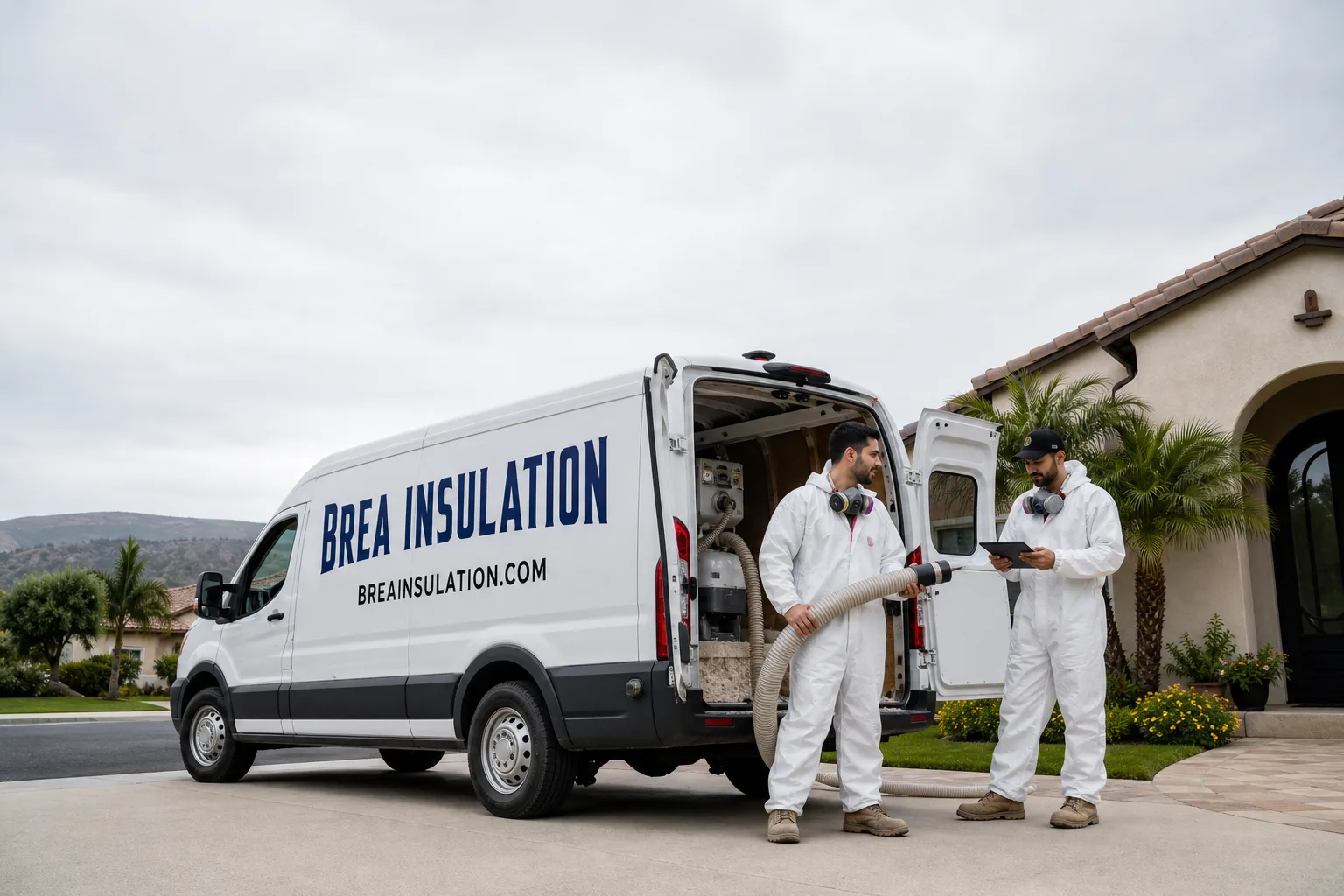
Spray Foam Insulation in Highland, CA: What It Costs and How It Fixes Older Homes
Spray foam insulation in Highland typically costs $3,200 – $7,800 for a full attic retrofit on a 1950s – 1970s ranch home, with rim joist work running $800 – $1,900 and wall cavity injection between $2,400 – $5,600. Most Highland jobs are completed in one to two days because we’re familiar with the specific framing and access issues in 92346 homes. Call (866) 858-4033 for a quote based on your exact square footage and existing insulation condition.
Highland’s semi-arid climate puts intense strain on older insulation. Summer attic temperatures routinely exceed 150°F, and when the original fiberglass batts in a 1960s tract home have settled or been pushed aside during decades of rewiring, that heat finds its way straight into your living space. Spray foam doesn’t just add R-value. It air-seals the voids that let radiant heat pour through, which is why it’s the most effective retrofit choice for homes along Baseline Road, Victoria Avenue, and the neighborhoods east of the 210.
Fast, Reliable Spray Foam Insulation Across Highland
We work in Highland every week. Our crews know the stretch of homes between Greenspot Road and Cole Avenue, and we’ve sprayed dozens of ranch-style houses in the tracts off Baseline and Church Street. That familiarity means we know what to expect before we open your attic: settled batts, displaced insulation around old can lights, and rim joists that were never sealed when the house went up in 1965.
Response time to Highland from our Brea shop is typically same-week, and for homeowners dealing with a heat emergency in July or August, we do our best to get a crew out within 48 hours. When you call (866) 858-4033, you’re talking to someone who knows the difference between a 1958 tract home off Victoria and the newer infill builds near Highland Avenue. That local knowledge saves you time and keeps the estimate accurate.
Why Brea Insulation Is Highland’s Preferred Spray Foam Insulation Company
We’re an insulation contractor, and that’s the whole story. We don’t roof, we don’t do HVAC, we don’t pour concrete. We spray foam, install attic insulation, and blow in cellulose. That single-trade focus is why Phil Darnell started Brea Insulation, and it’s why Highland homeowners call us when their AC can’t keep up and they suspect the attic is the problem.
Our crews carry eight material lines from manufacturers like Icynene, Demilec, Owens Corning, and GreenFiber, so the foam we recommend for your rim joists isn’t just “what’s on the truck.” It’s the product that matches your home’s specific failure points. For a 1960s Highland ranch with leaky rim joists and settled wall batts, that often means closed-cell foam for the rim and open-cell for attic kneewalls. We match the material to the job, not the other way around.
Spray Foam Wall Insulation in Highland
Spray foam wall insulation in Highland means injecting or spraying foam into the wall cavities of existing homes, and for most of the 1950s – 1970s tract houses in 92346, that’s a retrofit job rather than new construction. The work typically involves drilling access points through drywall or stucco, spraying foam into each stud bay, and patching cleanly afterward. Highland homeowners usually call us for this when they have a room that never cools down, or when an energy audit shows bare wall cavities behind the original siding.
For a standard single-story Highland ranch, wall cavity spray foam runs $2,400 – $5,600 depending on square footage and whether we’re working from the interior or exterior. The higher end covers homes with hard-coat stucco that requires more careful patching. Every wall job includes a full air-sealing pass around electrical boxes and plumbing penetrations, because those small leaks undo a lot of good work.
Closed-Cell for Structural Strength
Closed-cell spray foam adds rigidity to wall assemblies, which matters in older Highland homes where the original framing has settled and shifted. It also acts as a vapor barrier, useful when you’re dealing with stucco exteriors that trap moisture against the sheathing.
Open-Cell for Interior Walls
Open-cell foam is lighter and less expensive, and it’s often the right call for interior partition walls where sound control matters more than moisture resistance. We’ve used it in several Highland homes where a home office or bedroom sits against a noisy arterial like Baseline.
Rim Joist Spray Foam in Highland
Rim joist spray foam in Highland targets the band board where your floor framing meets the foundation, and in 1950s – 1970s tract homes this is one of the leakiest spots in the entire building envelope. The original builders rarely sealed these cavities, which means hot Inland Empire air moves through them all summer and cold air escapes all winter. Sealing rim joists with closed-cell foam typically runs $800 – $1,900 for a full perimeter in a Highland single-story home.
We recently sprayed Icynene closed-cell foam along the rim joists and wall cavities of a 1960s ranch off Baseline Road as part of a Reflectix repair in Highland. The homeowner complained of scorching afternoon heat gain and uneven cooling. When we opened the cavities, the original fiberglass batts had been displaced around decades of rewiring, leaving bare spots that radiated heat straight into the living space. After sealing those voids, the attic temperature dropped noticeably and the family said their AC finally kept up on 105°F days.
Sealing the Foundation-to-Floor Gap
The rim joist is where your crawlspace or basement meets the framed floor above. In Highland’s dry climate, dust and hot air move through these gaps freely, and sealing them with closed-cell foam cuts both heat gain and the fine particulates that accumulate in older homes.
Why Batts Fail Here
Fiberglass batts stuffed into rim joist cavities leave gaps at the edges and sag over time. Spray foam expands to fill the entire cavity and bonds to the wood, so it doesn’t shift or settle. That permanence matters in a climate where the temperature swing between 3 p.m. and 3 a.m. can be 40 degrees.
Trusted Brands We Service in Highland
We carry eight insulation brands so we can match the product to your home’s specific problem. For Highland’s hot, dry summers, our spray foam work leans on Spray Foam Insulation products from Icynene and Demilec, two names that hold up under sustained heat exposure. When a customer prioritizes recycled materials, GreenFiber cellulose is an option for attic top-ups. For fire-resistant or acoustic applications, we turn to Owens Corning and Rockwool. Having all of these on the bench means we’re not pushing one product on every home in Highland. We’re picking the one that solves your specific heat gain or air leak.
Common Spray Foam Insulation Problems We See in Highland Homes
- Settled or disturbed original fiberglass: Decades of HVAC retrofits, rewiring, and can-light installations have pushed aside the original batts in hundreds of Highland tract homes. That leaves bare drywall with no insulation at all, and the heat pours through those spots all summer.
- Unsealed rim joists: The band boards on 1950s – 1970s homes were rarely sealed at the time of construction. Hot air moves through these cavities all day, and even a well-insulated attic won’t fix it because the leak is at the floor line.
- Foam shrinkage on poorly prepped substrate: Older Highland ranch homes have dusty, settled attics with decades of debris on the sheathing. If the substrate isn’t cleaned and prepped correctly before spraying, closed-cell foam can pull away from the deck and lose its air-sealing value.
- Uneven cooling from bare hot spots: When insulation has been disturbed around recessed lights or bathroom fans, the rooms below those spots run 5 – 10°F warmer than the rest of the house. Spray foam fills those voids completely, which batts and loose-fill can’t do.
Pricing for Spray Foam Insulation in Highland, CA
Highland spray foam pricing falls into three clear buckets. Full attic spray foam retrofits run $3,200 – $7,800 for a typical 1,200 – 2,000 square foot ranch home. Rim joist sealing around the full perimeter costs $800 – $1,900. Wall cavity injection or spray ranges from $2,400 – $5,600 depending on access. The biggest cost variables are square footage, whether we’re working around existing insulation that needs removal, and how much prep the substrate requires. Estimates are free, and we give you a line-item quote before any work starts. Call (866) 858-4033 to book an attic inspection with Phil Darnell or one of our senior techs.
We Also Serve Cities Near Highland
Beyond Highland, our crews cover Spray Foam Insulation in Highland‘s neighboring communities regularly. We work in San Bernardino, Muscoy, Redlands, and Loma Linda, which means if you’re on the edge of Highland near the 210 or down toward the 330, we’re already in your area most weeks.
Serving Highland, CA — Our Local Coverage Area
We’re based in the Highland area and know this community well. Use the map below to see our service coverage — if you’re nearby, we can almost certainly help.
FAQs About Spray Foam Insulation in Highland
Yes, and in most Highland tract homes it’s the most effective fix because the problem is air leaks and settled batts, not just missing R-value. Spray foam fills the voids where old fiberglass has been pushed aside and seals the gaps that let hot air bypass insulation entirely. Homeowners who retrofit with spray foam typically see their upstairs or afternoon rooms drop several degrees on peak days. Call (866) 858-4033 and we’ll inspect your attic to show you exactly where the heat is getting through.
Retrofit with spray foam, and here’s why: patching old batts into disturbed cavities leaves the same air leaks in place. Spray foam expands to fill the entire cavity and air-seals as it goes, which batts can’t do. For most 1950s – 1970s Highland homes, we recommend removing the worst of the settled material and spraying foam directly against the attic floor or wall cavities. The cost is higher than a patch job, but the energy savings and comfort difference justify it within two to three summers here.
Highland can swing 40 degrees between afternoon and pre-dawn, and unsealed rim joists let hot air in all day and warm air out all night. Closed-cell spray foam bonds to the band board and seals the entire cavity, creating a continuous thermal break at the floor line. That stabilizes indoor temperatures and takes a measurable load off your HVAC system. A full rim joist seal on a Highland single-story typically costs $800 – $1,900.
We install Icynene and Demilec spray foam for nearly all of our Highland wall and rim joist work, and we choose between them based on the specific cavity and moisture conditions. Both are professional-grade closed-cell and open-cell lines that hold up under sustained Inland Empire heat. For attic top-ups where a homeowner wants a recycled option, we also offer GreenFiber cellulose. Your quote will name the exact product we recommend and why.
Yes. We inject foam through small access holes drilled through drywall or stucco, then patch them cleanly afterward. Most wall retrofits are done from the interior and take one to two days, with no need to tear out entire wall surfaces. For homes with hard-coat stucco on the exterior, we work from inside to protect the finish. Call (866) 858-4033 for a wall-cavity assessment and exact quote for your Highland home.
Call Brea Insulation for Spray Foam in Highland
If your Highland home struggles to stay cool in July, or you know your attic insulation is original from the 1960s, we can diagnose the real problem and install the right product the first time. Phil Darnell and the Brea Insulation crew work in Highland every week, and we know these houses. Call (866) 858-4033 for a free estimate, or to schedule an attic inspection before the next heat wave hits. Spray foam is all we do, and that focus is what keeps Highland homeowners comfortable when the thermometer crosses 100°F.
Written by Phil Darnell, Owner at Brea Insulation, serving Highland and the Inland Empire.