
Insulation Company in Crestline, CA
Blown in insulation is the most common retrofit we install in Crestline, because so many of the cabins and A-frames up here were built between the 1920s and 1970s with empty wall cavities and shallow attic spaces that were never meant to hold a mountain winter. At roughly 4,500 feet in the San Bernardino Mountains, a Crestline home loses heat through every uninsulated surface, and flatland installers rarely account for snow load, freeze-thaw cycles, or the fire-risk materials that belong near the wildland-urban interface. Brea Insulation has served Crestline since 2014, and our crew understands what these older mountain structures actually need. Call (866) 858-4033 to talk through your home’s specific situation.
Why Crestline Homes Are Different
Crestline’s housing stock is mostly 1920s through 1970s mountain cabins, A-frames, and small chalets. Many were built as seasonal getaways, not year-round residences, so insulated cavities were an afterthought. The homes sit on pier-and-beam or slab foundations, single-pane windows, wood siding, and have been added onto piecemeal over decades. That means wall cavities are inconsistent, some walls have no cavity at all, and attic spaces are often too shallow to crawl through. When we show up to quote a job, we expect surprises: a wall that’s half-framed, an attic that’s really just a crawlspace, or fiberglass batts that were shoved in forty years ago and have since collapsed into a dusty, useless mat.
The climate does not forgive a poorly insulated home here. Crestline winters bring snow accumulation, and below-freezing nights stretch from November into March. Summer brings hot, dry stretches and the ever-present wildfire risk that shapes material choices in the mountain communities. Insulation in Crestline has to do two jobs at once: hold heat in during January and keep it out during August. Fire-resistant and ember-resistant materials, particularly mineral wool, are increasingly the right call for homes that sit close to forested land. These are not the conditions a flatland contractor plans for, and they change both the materials we recommend and the way we install them.
One more thing shapes Crestline work more than almost any other factor: most cabins and chalets here are second homes or vacation rentals. That means retrofit insulation jobs are typically squeezed between rental bookings, with owners who are not on-site. Sometimes the call comes after a burst pipe or rodent infestation has destroyed attic insulation during the off-season, and the owner only finds out when they arrive for a holiday weekend. We schedule around those realities, and we have done enough Crestline jobs to know what to look for when the owner can’t be there to point it out.
Our Main Crestline Services
Crestline homeowners call us most about two insulation methods: attic insulation and spray foam. Both solve real mountain-weather problems, but they go about it differently depending on the home’s age, framing, and how the owner uses the property.
Attic Insulation in Crestline
Most heat loss in a Crestline cabin happens through the attic, especially in older homes where the original insulation was minimal or has broken down over decades. Shallow attic spaces, irregular framing from piecemeal additions, and snow sitting on the roof for weeks all change how we approach the work. In a vacation rental, an underinsulated attic also means higher heating bills for owners trying to keep pipes from freezing between guest stays. We evaluate what’s already up there, calculate the right R-value for this elevation, and install materials matched to the home’s fire-risk profile. Attic Insulation in Crestline covers the method, materials, and what to expect in this mountain climate.
Spray Foam Insulation in Crestline
Spray foam solves a problem that batts and blown-in cannot: air infiltration through the gaps, cracks, and irregular framing that define so many Crestline cabins. Open-cell foam works well for sound control and interior cavities, while closed-cell adds structural rigidity and a moisture barrier, which matters in homes that sit empty for weeks and then get slammed with winter condensation. For a property manager dealing with rodent entry or an owner who wants to turn a drafty chalet into a four-season home, spray foam is often the single biggest upgrade available. Spray Foam Insulation in Crestline walks through the methods, the materials, and what makes sense for mountain construction.
What happens when you call
- 1
A real person answersNo phone trees — you reach a local pro.
- 2
You get an upfront price rangeHonest numbers before anyone is dispatched.
- 3
A background-checked tech heads outLicensed & insured, dispatched right away.
- 4
You approve before work beginsNothing starts until you say go.
Blown In Insulation in Crestline
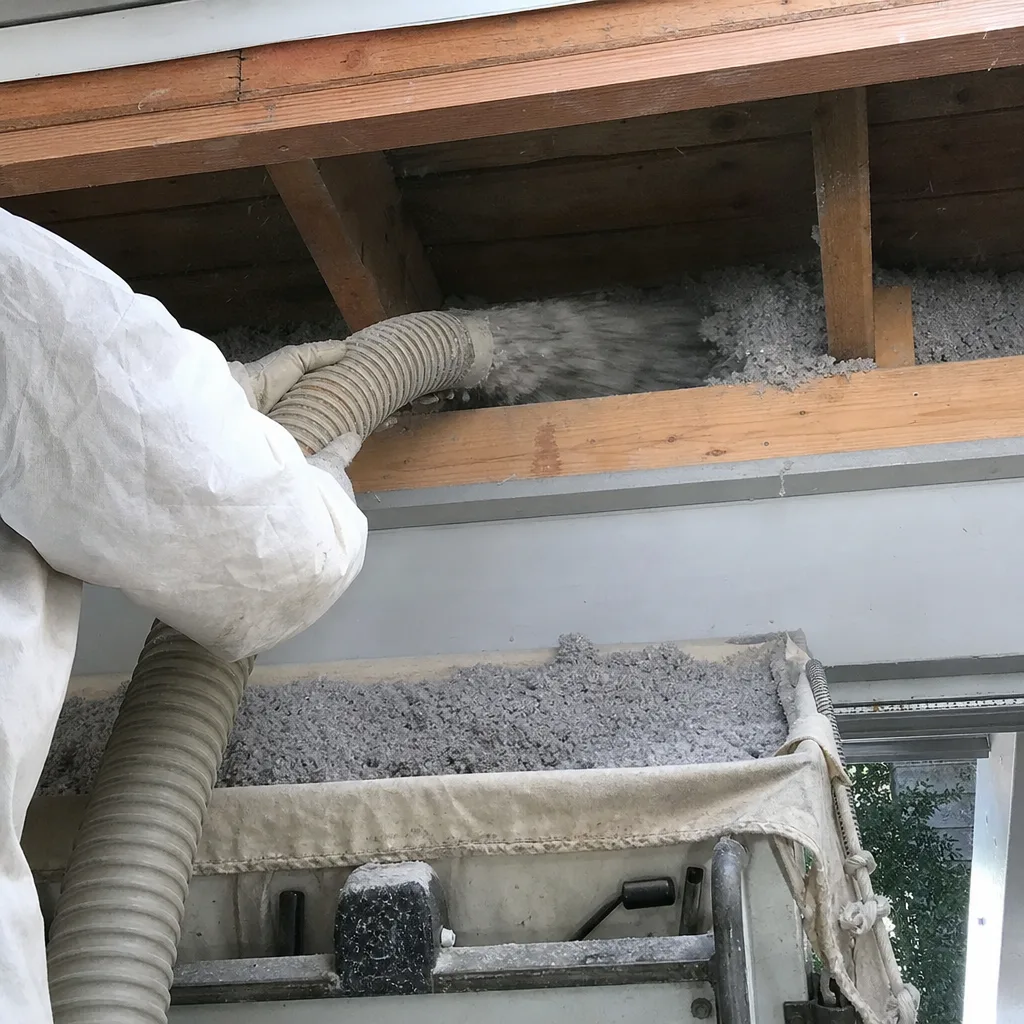
Blown in insulation is the workhorse retrofit for Crestline’s older cabins and A-frames. Homes built between the 1920s and 1970s typically have minimal or no insulation in walls, floors, and shallow attics, and blown in material is the only practical way to reach existing cavities without tearing open the siding or drywall. In a Crestline winter with snow on the roof and below-freezing nights, a properly insulated attic and wall cavity keeps heat in the living space instead of leaking through the framing, and in summer it slows the heat that turns an upstairs loft into an oven by 3 p.m. For vacation rental owners who live off the mountain, blown in insulation is also the fastest way to bring an older cabin up to something resembling modern comfort between rental turnovers. Brea Insulation installs blown in material across Crestline, and we carry both fiberglass and cellulose options so the right material goes in based on the home, not on what’s easiest to stock. Our full method breakdown is on the Blown In Insulation page.
Cellulose Insulation
Signs you need it
You feel drafts near baseboards in winter, rooms above the garage stay cold no matter how high the thermostat is, or you can see the top plates of wall framing from inside the attic.
What it costs in Crestline
Blown in cellulose in Crestline typically ranges from $1.10 to $2.20 per square foot of wall or attic surface, depending on cavity depth and access.
How we do it
We drill access holes into each stud bay, feed a hose into the cavity, and dense-pack the cellulose until the cavity is completely filled, then plug and patch the holes so the wall looks untouched.
Blown In Attic Insulation
Signs you need it
Snow melts off your roof faster than your neighbors’ roofs in Crestline, your top floor is noticeably warmer in July, or your heating bills climb every winter while the house never feels warm.
What it costs in Crestline
Blown in attic insulation in Crestline typically runs $2,350 to $3,800 for an attic, or roughly $1.98 to $3.50 per square foot depending on the target R-value and access.
How we do it
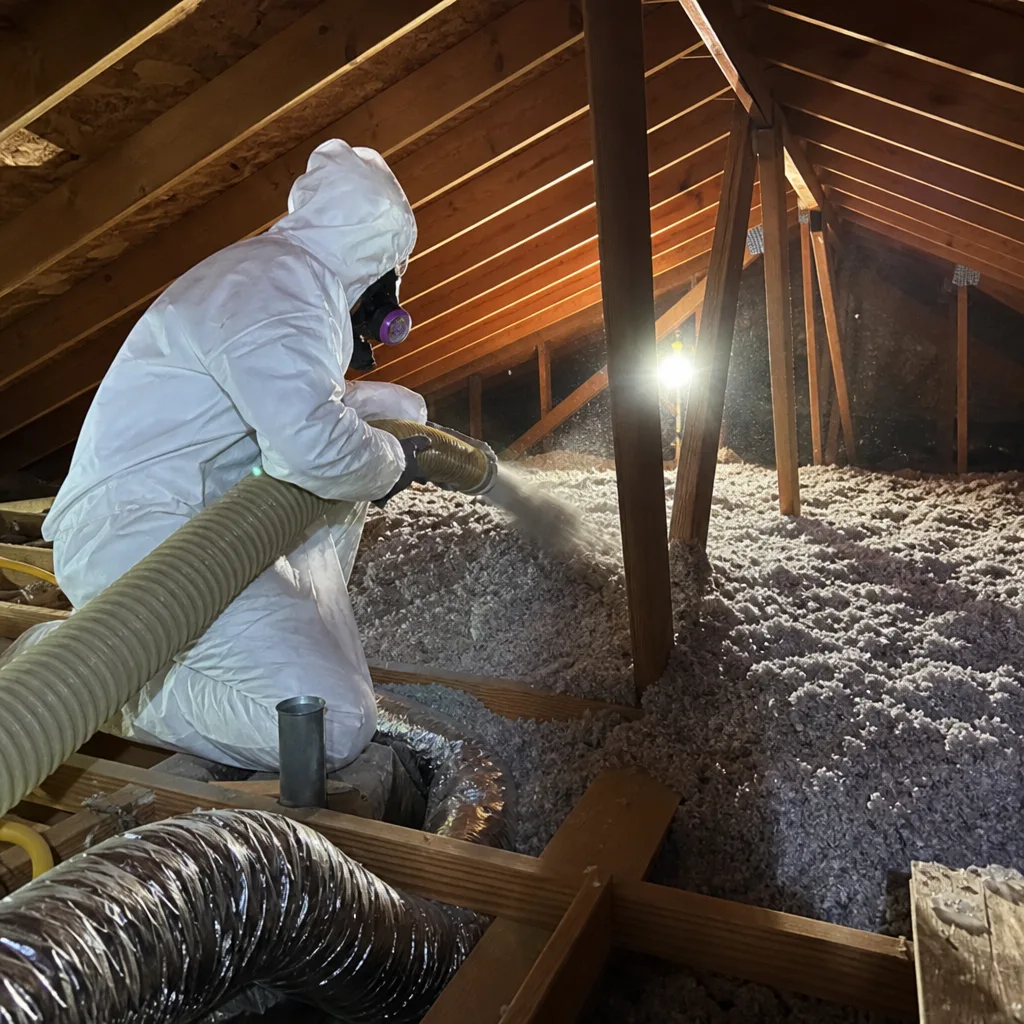
We air-seal the attic floor penetrations first, then blow loose-fill insulation across the entire floor to a consistent depth matched to the R-value this mountain climate needs.
Blown In Cellulose Insulation
Signs you need it
Your attic still has the original sawdust or rock wool from the cabin’s build era, or existing fiberglass batts have been flattened, chewed through, or soaked from a past roof leak.
What it costs in Crestline
Removing old attic material and blowing in new cellulose in Crestline typically ranges from $2.30 to $3.80 per square foot including removal, though attics free of rodent damage run lower.
How we do it
We vacuum out the old material when needed, seal air leaks at the attic floor, and blow GreenFiber or equivalent recycled cellulose to the depth your home’s ceiling framing can carry.
Blown In Fiberglass Insulation
Signs you need it
You want an attic top-up at a lower installed cost per R-value, or your home’s roof structure is shallow enough that cellulose would sit too close to the roof decking.
What it costs in Crestline
Blown in fiberglass in Crestline typically ranges from $1.30 to $2.20 per square foot of attic surface, with whole-attic jobs usually falling between $1,600 and $2,700.
How we do it
We blow loose-fill fiberglass across the attic floor using a calibrated machine so every section hits the same depth and R-value, and we never leave gaps around eaves or plumbing stacks.
Loose Fill Insulation
Signs you need it
Your cabin has hard-to-reach spaces, odd-shaped wall cavities from piecemeal additions, or a low-slope attic that a person can’t safely crawl through.
What it costs in Crestline
Loose fill insulation in Crestline typically ranges from $1.10 to $2.80 per square foot installed, with dense-pack wall jobs running higher than open attic floor applications.
How we do it
We use a high-output blowing machine to deliver loose fill into whatever cavity needs it, adjusting air pressure and material density so the fill locks into place without settling later.
What Blown In Insulation Costs in Crestline
| Item | Typical range in Crestline |
|---|---|
| Blown in attic insulation (full attic) | $2,350 – $3,800 |
| Blown in wall insulation (dense-pack) | $1.10 – $2.20 per sq ft |
| Attic top-up with blown in fiberglass | $1,600 – $2,700 |
Is blown in insulation worth it for a Crestline vacation rental?
Yes, because it directly reduces the heating cost of keeping pipes from freezing between guest stays. Most Crestline vacation rental owners see lower off-season utility bills and fewer burst-pipe incidents after an attic and wall retrofit. Call (866) 858-4033 and we’ll walk through what your cabin actually needs.
Can you work around a rental calendar in Crestline?
We do it regularly. We schedule around your bookings, coordinate with your property manager, and can often complete an attic or wall blow-in between checkout and the next check-in. Call (866) 858-4033 with your calendar and we’ll figure out timing.
Brands We Service in Crestline
Our Crestline installs draw from an eight-brand material bench so the product matches the mountain home, not some default spec. CertainTeed and GreenFiber are two we reach for often up here: CertainTeed for its fiberglass and mineral wool lines that hold up in fire-prone areas, and GreenFiber recycled cellulose for owners who want a lower-impact material in their cabin. We also install Icynene and Demilec spray foam lines when air sealing is the priority. Parts and materials for common Crestline jobs are stocked locally, which keeps most retrofits moving in a day or two once we start. See the full lineup on our brands page.
Pricing for Insulation Company in Crestline, CA
| Service | Typical range in Crestline |
|---|---|
| Blown in attic insulation (full attic) | $2,350 – $3,800 |
| Blown in attic insulation (per sq ft) | $1.98 – $3.50 |
| Blown in wall insulation (dense-pack, per sq ft) | $1.10 – $2.20 |
| Blown in fiberglass (attic top-up, per sq ft) | $1.30 – $2.20 |
| Blown in fiberglass (whole attic) | $1,600 – $2,700 |
| Blown in cellulose (attic, per sq ft) | $1.10 – $2.20 |
| Blown in cellulose (attic redo with removal, per sq ft) | $2.30 – $3.80 |
| Attic insulation (general, per sq ft) | $1.98 – $3.50 |
| Spray foam insulation (per sq ft) | $1.82 – $3.04 |
| Loose fill insulation (per sq ft) | $1.10 – $2.80 |
What pushes a Crestline quote higher than the same job down the hill: attic spaces too shallow to work in without opening the ceiling, wall cavities so irregular that each stud bay has to be handled individually, and rodent or water damage that requires removal and cleanup first. We quote upfront with a fixed price after the inspection, so there’s no surprise when the crew shows up. Call (866) 858-4033 for a free estimate.
Neighborhoods We Serve in Crestline
We work across the entire 92325 ZIP code, from the lake-adjacent cabins near Lake Gregory to the forested lots further up the ridge where the roads narrow and the snow lingers longer. Our crews know how to stage materials on sloped driveways and navigate the hairpin turns that keep flatland delivery trucks away.
- Lake Gregory area
- Valley of Enchantment
- Cedar Pines Park
- Top Town
- Skyland
Response time across Crestline is typically same-week, and we hold specific days for mountain jobs during winter months so weather delays do not push your project out for weeks.
Service Area – Cities Near Crestline
Brea Insulation handles jobs throughout the San Bernardino Mountains and the surrounding foothill communities. We regularly run crews up to Lake Arrowhead, CA and down the mountain to San Bernardino, CA, Highland, CA, and Muscoy, CA. If your home sits between these areas, call us and we’ll tell you straight whether we can get a crew there on the schedule you need.
Serving Crestline, CA — Our Local Coverage Area
We’re based in the Crestline area and know this community well. Use the map below to see our service coverage — if you’re nearby, we can almost certainly help.
FAQs About Insulation Company in Crestline
Most Crestline estimates happen within three to five business days, and we batch mountain visits so you’re not waiting on a one-off trip. Call (866) 858-4033 and we’ll slot you into the next mountain run. Emergency assessments for burst-pipe insulation damage get priority.
Most insulation retrofits in Crestline do not require a permit, but homes within the wildland-urban interface may have fire-safety code requirements that affect material choices. We check both before the crew arrives so the job meets current code without slowing down your project.
Yes. A large share of our Crestline work is done for owners who live off the mountain. We coordinate directly with your property manager or housekeeper for access, document the job with photos, and send the final invoice by email, so you don’t have to be on-site at any point.
What happens when you call
- 1A real person answersNo phone trees — talk to a local insulation pro.
- 2You get an upfront price rangeHonest numbers before anyone is dispatched. No surprises.
- 3A background-checked tech heads outLicensed & insured, typically within 60-minute.
- 4You approve before work beginsNothing starts until you say go.
What Crestline Customers Say
"Found and sealed a gap around the chimney chase that was basically an open chimney to the attic."
— Darius Grant"Installed baffles at the soffits so the new insulation didn't block the ventilation, which the previous contractor apparently never considered."
— Marisol Vargas"Told me the crawlspace didn't need doing and only the attic did. Half the job, half the money."
— Kelly Reed