Fast, Reliable Attic Insulation Across Corona
Attic insulation replacement in Corona typically runs $1,800 – $4,200 for a standard 1,200 – 1,800 sq ft home, and mold removal or old insulation extraction adds $900 – $2,400 depending on attic size and access. Most jobs take one day once we’re on site, and we schedule Corona calls within 24 – 48 hours in most weeks. If your attic is baking through a Santa Ana stretch or your energy bills have crept up every summer, call us at (866) 858-4033 for a straight answer and a free estimate.
Brea Insulation works across Corona’s 92882, 92883, 92877, and 92878 ZIP codes every week. We know the difference between a flatland tract house near the 91 and a Temescal Valley home climbing the grade, because that difference changes what belongs in your attic. Insulation is all we do, and that narrow focus means we diagnose the real problem instead of guessing.
Why Brea Insulation Is Corona’s Preferred Attic Insulation Company
Corona homeowners call us because we carry eight manufacturer lines, including Owens Corning, Icynene, and GreenFiber, and we match the material to the house, not to what’s sitting in a warehouse. A 1980s tract home with cathedral ceilings in the 92881 grid needs a different approach than a 2015 build in 92883. We install both, and we know why the difference matters.
Our crew has spent enough hours in Corona attics to recognize the local failure patterns before we even climb the ladder. West-facing attics in the 92881/92882 tracts, the ones that catch full afternoon sun during Santa Ana events, degrade insulation faster than east-facing homes on the same street. That kind of local knowledge changes the recommendation. We don’t apply a generic R-value chart and call it done.
Phil Darnell leads our team, and the standard he set is simple: install it like you’re going to be the one paying the next ten years of energy bills. That means air-sealing top plates, checking baffles, and verifying the final R-value, not just blowing material in and disappearing. Corona homeowners who’ve hired us once tend to call back when they buy another property or add on.
Attic Mold Removal in Corona
Attic mold removal in Corona is a job we handle regularly, and it’s often tied directly to the Temescal Valley side of town where older vapor barrier detailing was skipped or done wrong during original construction. Homes in 92883 sitting on former mine-affected ground can pull moisture up through the slab and into the attic cavity, and once mold takes hold in insulation, no amount of surface cleaning fixes the problem. The insulation has to come out, the framing gets treated, and only then does new material go back in.
When Removal Becomes Necessary
Dark staining on roof sheathing, a musty smell that gets stronger in summer, or visible mold on the underside of batt insulation are all signs the attic needs professional attention. In Corona’s climate, the heat doesn’t kill the mold. It bakes it, releases spores into the air path, and sends them cycling through the house when the AC runs. If you’re seeing black or green growth up there, the fix is extraction and treatment, not painting over it.
What Removal and Treatment Costs
For a typical Corona attic, expect to pay $900 – $2,400 for full mold-affected insulation removal, surface treatment, and disposal. The range depends on attic size, how much of the insulation is contaminated, and whether the space is walkable or requires crawl-access work. Every mold job includes air-sealing before the new insulation goes in, because sealing the path moisture used to get there is the only way to keep the problem from returning.
Attic Insulation Removal in Corona
Attic insulation removal in Corona is often the first step when original builder-grade batts from a 1980s or 1990s tract home have compressed to a fraction of their rated R-value. We see R-11 and R-19 batts in homes across the 92879 – 92882 grid that have been baking for 30 years and now measure under 2 inches thick. That’s not insulation anymore. It’s a mat of compressed fiberglass sitting between the ceiling joists, and removing it is the only way to start clean.
When Old Insulation Needs to Go
Rodent activity, water damage from a roof leak, or decades of Santa Ana heat degradation all create situations where adding new insulation on top of bad insulation makes the problem worse. Old material traps moisture, hides mold, and blocks proper air-sealing work. When we remove it, we also get eyes on the ceiling drywall, recessed light housings, and top plates, which is where most air leakage in Corona homes actually happens.
What Extraction Runs in Corona
Insulation removal alone for a standard 1,500 sq ft attic in Corona usually costs $1,100 – $2,800. The job includes bagging and disposal, surface cleaning, and a full inspection of the attic cavity before new material is installed. Combining removal with a fresh insulation installation saves money over doing them as two separate visits, since the crew is already set up and staged.
Trusted Brands We Service in Corona
We stock and install materials from Owens Corning, Icynene, and GreenFiber, plus Rockwool, CertainTeed, Johns Manville, Knauf, and Demilec. Carrying eight brands means we’re never trying to sell you whichever product happens to be on the truck. A 92883 foothill home that needs vapor-barrier detailing might get closed-cell spray foam from Icynene or Demilec. A straightforward flatland attic looking for a top-up gets blown-in GreenFiber cellulose or Owens Corning fiberglass. We keep inventory staged for quick turnaround on Corona jobs, so a confirmed estimate usually becomes a scheduled install within days, not weeks.
Common Attic Insulation Problems We See in Corona Homes
- Santa Ana heat compression. West-facing attics in the 92881/92882 tracts routinely exceed 150°F during wind events, and blown-in fiberglass settles and compresses faster than the manufacturer’s rating assumes. What started as R-38 may be performing like R-24 after a few hot seasons.
- Missing vapor barriers in 92883 foothill homes. Temescal Valley parcels on former mine-affected ground often skip the vapor and air-sealing detailing that flatland builder playbooks never called for. The result is moisture in the attic, mold, and insulation that loses its effectiveness.
- Cathedral ceiling dead zones. 1980s – 2000s tract homes across the 92879 – 92882 grid frequently have vaulted ceilings with tight, hard-to-ventilate cavities. Heat builds up, accelerates batt degradation, and makes rooms underneath them noticeably hotter in summer.
- Builder-grade R-11 to R-19 batts. Most original Corona attics were insulated to minimum code at the time, not to what the local climate actually demands. Three decades of wide day-night temperature swings leave those batts compressed, dusty, and well below modern efficiency standards.
Pricing for Attic Insulation in Corona, CA
A full attic insulation replacement in Corona runs $1,800 – $4,200 for a typical single-family home. Blown-in fiberglass or cellulose runs $1.50 – $2.80 per square foot installed. Batt insulation lands at $2.00 – $3.50 per square foot. Spray foam runs higher, at $3.50 – $6.50 per square foot, but includes air-sealing value that fibrous materials can’t match. Add $900 – $2,400 if old insulation or mold needs removal first. Attic size, access difficulty, and whether we’re air-sealing top plates and recessed lights all move the number. Call (866) 858-4033 and we’ll give you an exact quote based on your attic, not a spreadsheet average. Estimates are free.
We Also Serve Cities Near Corona
Our Attic Insulation crews cover Corona and the surrounding cities on both sides of the 15 and the 91. We regularly work in Home Gardens, El Cerrito Corona, Eastvale, and Norco, which means our scheduling stays flexible and our trucks are already in the area every week. If you’re anywhere in the greater Corona area, we can get to you quickly.
Serving Corona, CA — Our Local Coverage Area
We’re based in the Corona area and know this community well. Use the map below to see our service coverage — if you’re nearby, we can almost certainly help.
FAQs About Attic Insulation in Corona
West-facing attics in those tracts catch direct afternoon sun and get hammered by Santa Ana wind events that push attic temperatures past 150°F. That sustained heat cycles fiberglass batts and blown-in material through extreme expansion and contraction, causing settling and compression that drops effective R-value well below the installed rating. Houses in coastal cities don’t see the same temperature spikes, so their insulation degrades on a slower timeline. If your attic faces west in those ZIP codes, expect to inspect insulation more frequently. Call (866) 858-4033 and we’ll assess what’s actually up there.
Yes. Homes in 92883 sit on foothill grades and some parcels are on former mine-affected ground, which means moisture behavior differs from flatland tracts. Vapor barriers and air-sealing detailing matter more there, and under-insulated walls become noticeable during winter chills that flatland homes don’t feel as sharply. We recommend a different spec for these homes: closed-cell spray foam or blown-in with proper vapor control, not a one-size R-value. Call us and we’ll tell you which approach fits your specific street.
If your attic has original R-11 to R-19 batts that measure under 3 inches thick, show dark staining, smell musty, or have visible rodent damage, removal is the right call. Homes built in the 1980s through 2000s across the 92879 – 92882 grid almost always started with minimum-code insulation, and three or four decades of Corona heat cycles have compressed it well below useful levels. We inspect for free and will tell you honestly whether removal is necessary or a top-up will do. Call (866) 858-4033.
We recommend R-49 for most Corona attics, which exceeds the current code minimum and accounts for the extreme heat and wide day-night swings that define this climate. Older builders stopped at R-19 or R-30, which is nowhere near enough when summer attic temperatures climb past 140°F. For foothill homes in 92883, we may recommend spray foam at R-38 or higher because the air-sealing benefit matters as much as the R-value itself. Call (866) 858-4033 for a recommendation based on your attic’s actual configuration.
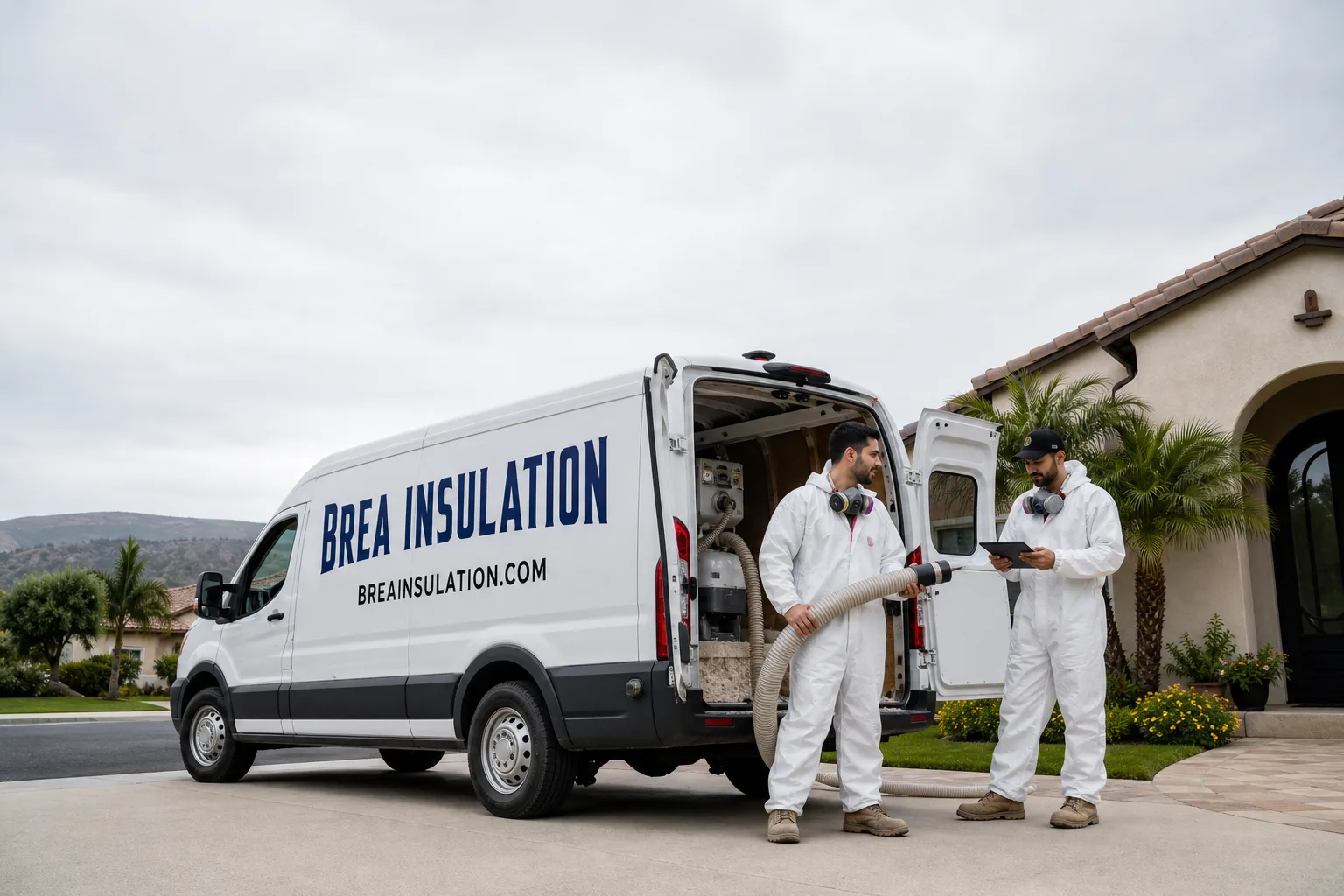
Yes. We use vacuum extraction equipment and hand tools designed for attic work, and our crews work from the attic side, not through the ceiling. Drywall, recessed light housings, and truss chords stay intact throughout removal and treatment. We’ve done hundreds of extractions in Corona attics, including the tight cathedral-ceiling cavities that make some contractors nervous. If you’re worried about the condition of your ceiling or the cleanup involved, call (866) 858-4033 and we’ll walk you through exactly how the job gets done.
Written by Phil Darnell, Owner at Brea Insulation, serving Corona and the surrounding Inland Empire.