
Insulation Company in March Air Force Base, CA
Blown In Insulation is the workhorse service for March Air Force Base homes, and for good reason: most of the housing stock here dates to the 1940s through 1960s, when military construction speed mattered more than thermal performance. The result is shallow attics, thin or settled insulation, and rooms that bake in Riverside County’s triple-digit summers and chill fast on winter nights. Brea Insulation has served March Air Force Base since 2014, matching the right blown-in material – cellulose or fiberglass – to each structure’s actual cavity depth and venting. Call (866) 858-4033 to schedule an assessment.
Why March Air Force Base Homes Are Different
March Air Force Base isn’t a typical Riverside County suburb. The housing runs toward mid-century military construction: wood-frame and block structures with shallow wall cavities, low-pitch vented attics, and original insulation that was never designed for today’s Title 24 energy targets. Many of these homes were built to wartime speed standards, then converted or re-let over the decades, so you can’t assume anything about what’s inside the walls or above the ceiling until someone actually looks.
The climate makes attic performance the dominant issue. Inland Riverside County delivers sustained triple-digit heat through summer, and that sun loads directly onto low-pitch roofs with very little attic airspace to buffer the transfer. Cool winter nights then pull heat out through the same under-insulated plane. The dry air is a small mercy: it limits moisture-driven insulation failures, so the focus stays on radiant-heat gain, duct conduction, and getting R-value where it’s missing. Attics here are often too shallow for standard blown-in depth, which means measuring usable cavity height before choosing material, and stacking or dense-packing where needed to avoid blocking eave vents.
Our Main March Air Force Base Services
Two services carry most of the workload in March Air Force Base, and each one is covered by its own dedicated page with full pricing and job details.
Attic Insulation in March Air Force Base
Attic insulation work here has to account for low-pitch roofs and limited cavity height, so we measure before we quote. The goal is reaching target R-values without suffocating eave vents – a real risk in shallow military-era attics. Blown-in fiberglass or cellulose often works better than thick batts when headroom is tight. Full details on materials, method, and March Air Force Base pricing are on the Attic Insulation in March Air Force Base page.
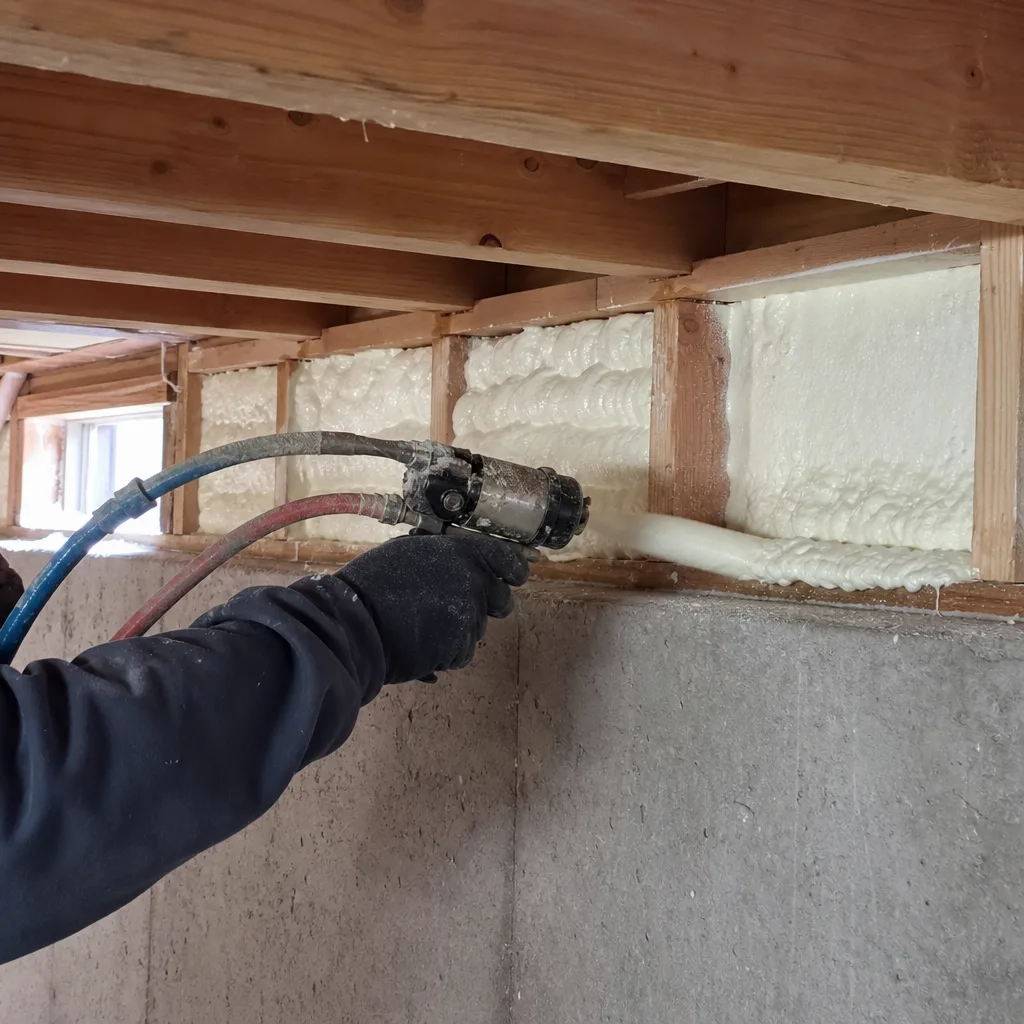
Spray Foam Insulation in March Air Force Base
Spray foam earns its keep on base-adjacent structures where air leakage is the bigger enemy than thin material. Open-cell foam fills irregular cavities in converted barracks and block-base homes, while closed-cell handles rim joists and kneewalls. In a dry climate like March Air Force Base, spray foam also locks out dust and the occasional driven rain. See the Spray Foam Insulation in March Air Force Base page for how we apply it and what it runs.
What happens when you call
- 1
A real person answersNo phone trees — you reach a local pro.
- 2
You get an upfront price rangeHonest numbers before anyone is dispatched.
- 3
A background-checked tech heads outLicensed & insured, dispatched right away.
- 4
You approve before work beginsNothing starts until you say go.
Blown In Insulation in March Air Force Base
Blown In Insulation in March Air Force Base solves the problem most of these mid-century military homes share: attics and wall cavities that either never had enough insulation or settled into near-uselessness over 50 to 80 years. Blown-in material works especially well here because it conforms to the shallow, uneven attic floors and irregular stud bays common in wartime construction, reaching R-value where batt seams would leak air. We carry both GreenFiber recycled cellulose and fiberglass options, so the recommendation follows what each structure’s cavity actually measures. Here’s the full breakdown of what Blown In Insulation involves in March Air Force Base.
Cellulose Insulation
Signs you need it
If your attic insulation is gray, settled below the joists, or dusty enough to disappear when you touch it, the old material has likely lost most of its thermal value.
What it costs in March Air Force Base
Cellulose attic top-ups in March Air Force Base typically run $1.20 to $2.10 per square foot installed, depending on existing depth and target R-value.
How we do it
We remove any compromised material if needed, then blow GreenFiber recycled cellulose to a consistent depth across the attic floor, keeping eave vents clear with baffles.
Blown In Attic Insulation
Signs you need it
Rooms directly under the roof run 10 to 15 degrees hotter than the rest of the house in summer, or your heating and cooling cycles run constantly from November through March.
What it costs in March Air Force Base
Blown-in attic insulation jobs in March Air Force Base generally land between $1,700 and $3,200 for an average base-area home, material and labor included.
How we do it
We air-seal the attic floor penetrations first, then blow loose-fill insulation to the measured R-value the attic’s depth can actually support.
Blown In Cellulose Insulation
Signs you need it
If wall cavities feel hollow when you knock, or rooms along exterior walls stay cold in winter despite a working furnace, the wall insulation is either missing or slumped.
What it costs in March Air Force Base
Dense-pack cellulose for existing wall cavities in March Air Force Base runs $2.10 to $3.10 per square foot of wall area.
How we do it
We drill small access holes at each stud bay, dense-pack the GreenFiber cellulose under pressure to fill the full cavity, then patch and touch up the holes.
Loose Fill Insulation
Signs you need it
You can see the ceiling joists poking through your attic insulation, or the material looks thin, patchy, and uneven across the attic floor.
What it costs in March Air Force Base
Loose fill insulation in March Air Force Base prices out at $1.10 to $1.90 per square foot for new work over open attic floor.
How we do it
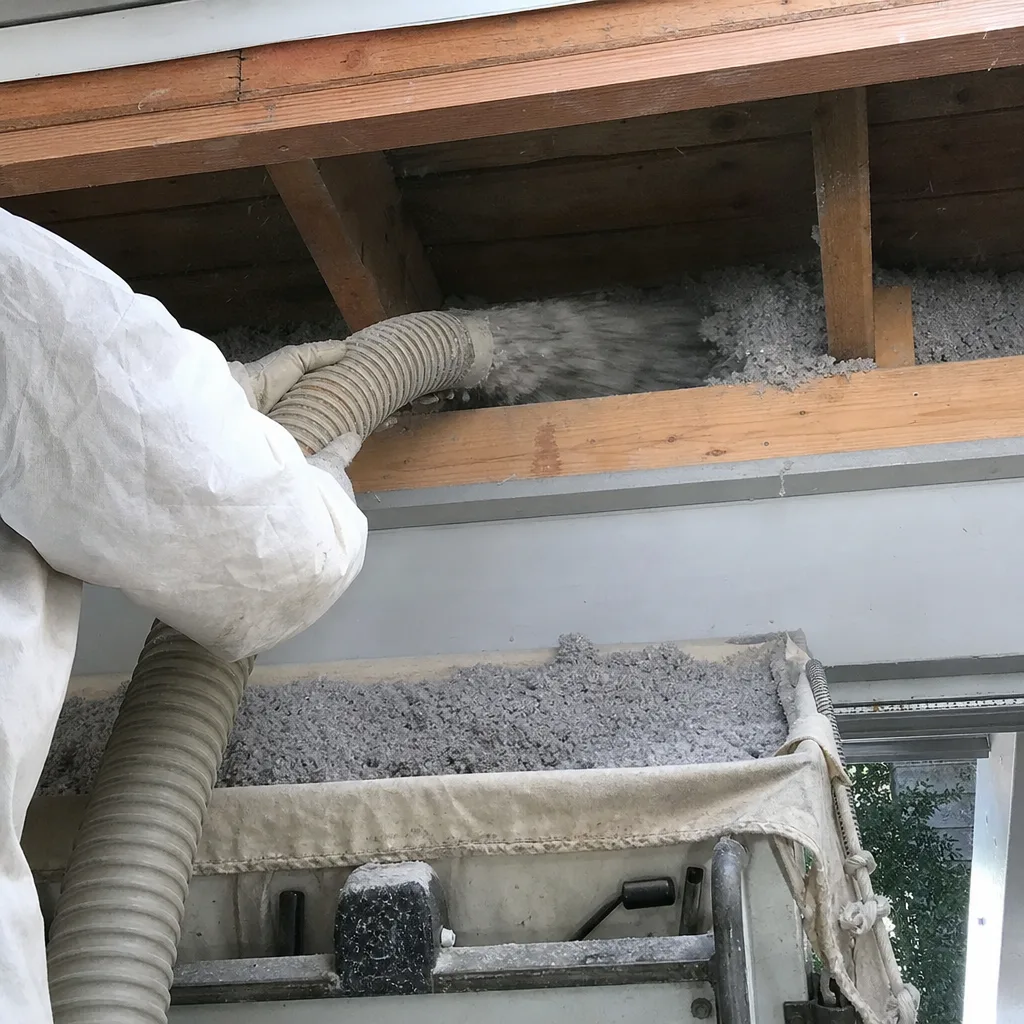
We run a calibrated blowing machine from the truck, lay a consistent blanket of loose-fill material, and check density in multiple spots with a depth gauge before we finish.
What Blown In Insulation Costs in March Air Force Base
| Item | Typical range in March Air Force Base |
|---|---|
| Cellulose attic top-up | $1.20 – $2.10 per sq ft |
| Blown-in attic insulation (full job) | $1,700 – $3,200 |
| Dense-pack wall cellulose | $2.10 – $3.10 per sq ft of wall area |
Is blown-in insulation worth it in March Air Force Base?
Yes, and the payback comes faster here than in coastal areas. Inland Riverside County summers push attic temperatures past 140 degrees, and even a few inches of new blown-in material dramatically cuts heat transfer into living space, dropping cooling run times within the first month.
Can you blow insulation into existing walls on base housing?
We can, and we do it without opening the walls. Dense-pack cellulose goes through small exterior access holes drilled at each stud bay, filling the cavity completely. It’s a standard retrofit method for the block-base and wood-frame homes common in March Air Force Base. Call (866) 858-4033 to find out if your wall cavities qualify.
Brands We Service in March Air Force Base
Insulation is all we do, and that focus shows in the material bench we bring to March Air Force Base. Our brands include GreenFiber recycled cellulose, CertainTeed fiberglass, Icynene spray foam, and Demilec closed-cell foam – each chosen for a specific cavity, climate, or performance need. Materials are delivered from our Brea yard, so typical turnaround runs a few days from quote to finished install.
Pricing for Insulation Company in March Air Force Base, CA
| Service | Typical range in March Air Force Base |
|---|---|
| Cellulose attic top-up | $1.20 – $2.10 per sq ft |
| Dense-pack wall cellulose | $2.10 – $3.10 per sq ft of wall area |
| Loose fill attic blow-in | $1.10 – $1.90 per sq ft |
| Blown-in attic insulation (full job) | $1,700 – $3,200 |
| Attic insulation (full attic, standard home) | $2,500 – $5,100 |
| Attic air sealing + insulation package | $2,900 – $5,400 |
| Spray foam insulation (open-cell, full attic) | $3,400 – $7,100 |
| Spray foam insulation (closed-cell, rim joists) | $700 – $2,000 |
| Spray foam insulation (closed-cell, full walls) | $4,200 – $9,000 |
| Spray foam insulation (full home, new construction) | $7,500 – $14,100 |
Prices in March Air Force Base climb when the attic is unusually shallow, when old material must be removed first, or when dense-packing wall cavities adds access time to the job. Brea Insulation quotes every job upfront with material and labor separated, so you’ll know the exact number before any work begins.
Neighborhoods We Serve in March Air Force Base
We cover the full 92551 ZIP and the base-adjacent housing clusters around it, including:
- Base housing areas along Riverside Drive
- Family housing north of Van Buren Boulevard
- The converted duplex rows near the main gate
- Officer quarters and older barracks-adjacent blocks
- Civilian residential streets rimming the base perimeter
Most March Air Force Base appointments can be scheduled within one to two weeks, and we keep a small same-day slot available for urgent attic failures during peak summer.
Service Area – Cities Near March Air Force Base
Beyond March Air Force Base, our crews run regular routes through the surrounding Riverside County communities. You’ll find us working in Moreno Valley, CA to the north, over in Woodcrest, CA and Perris, CA to the southeast, and down through Good Hope, CA on the way to the 215 corridor. If you’re just outside the base boundary, call and we’ll confirm the schedule.
Serving March Air Force Base, CA — Our Local Coverage Area
We’re based in the March Air Force Base area and know this community well. Use the map below to see our service coverage — if you’re nearby, we can almost certainly help.
FAQs About Insulation Company in March Air Force Base
Most assessments happen within a week of your call, and full installs are usually scheduled one to two weeks after the quote is approved. During extreme heat events, we hold a small emergency slot for attics that have become dangerously hot or lost all function. Call (866) 858-4033 and we’ll give you the soonest available date.
For on-base military housing, the housing office sets the rules, and we’re familiar with working through their approval process. For privatized or off-base homes, some housing clusters have architectural or exterior-modification rules, but attic and interior insulation retrofits rarely trigger review. We’ll flag any approval step before we start.
Yes. Dense-pack cellulose goes through small exterior holes, and blown-in attic insulation requires no structural change at all. Spray foam can fill rim joists and attics without opening finished surfaces. Most of what we do in March Air Force Base is retrofit work that leaves the home fully intact.
What happens when you call
- 1A real person answersNo phone trees — talk to a local insulation pro.
- 2You get an upfront price rangeHonest numbers before anyone is dispatched. No surprises.
- 3A background-checked tech heads outLicensed & insured, typically within 60-minute.
- 4You approve before work beginsNothing starts until you say go.
What March Air Force Base Customers Say
"Installed baffles at the soffits so the new insulation didn't block the ventilation, which the previous contractor apparently never considered."
— Marisol Vargas"Told me the crawlspace didn't need doing and only the attic did. Half the job, half the money."
— Kelly Reed"Handled the utility rebate paperwork, which knocked a real amount off the final cost."
— Diego Garcia