
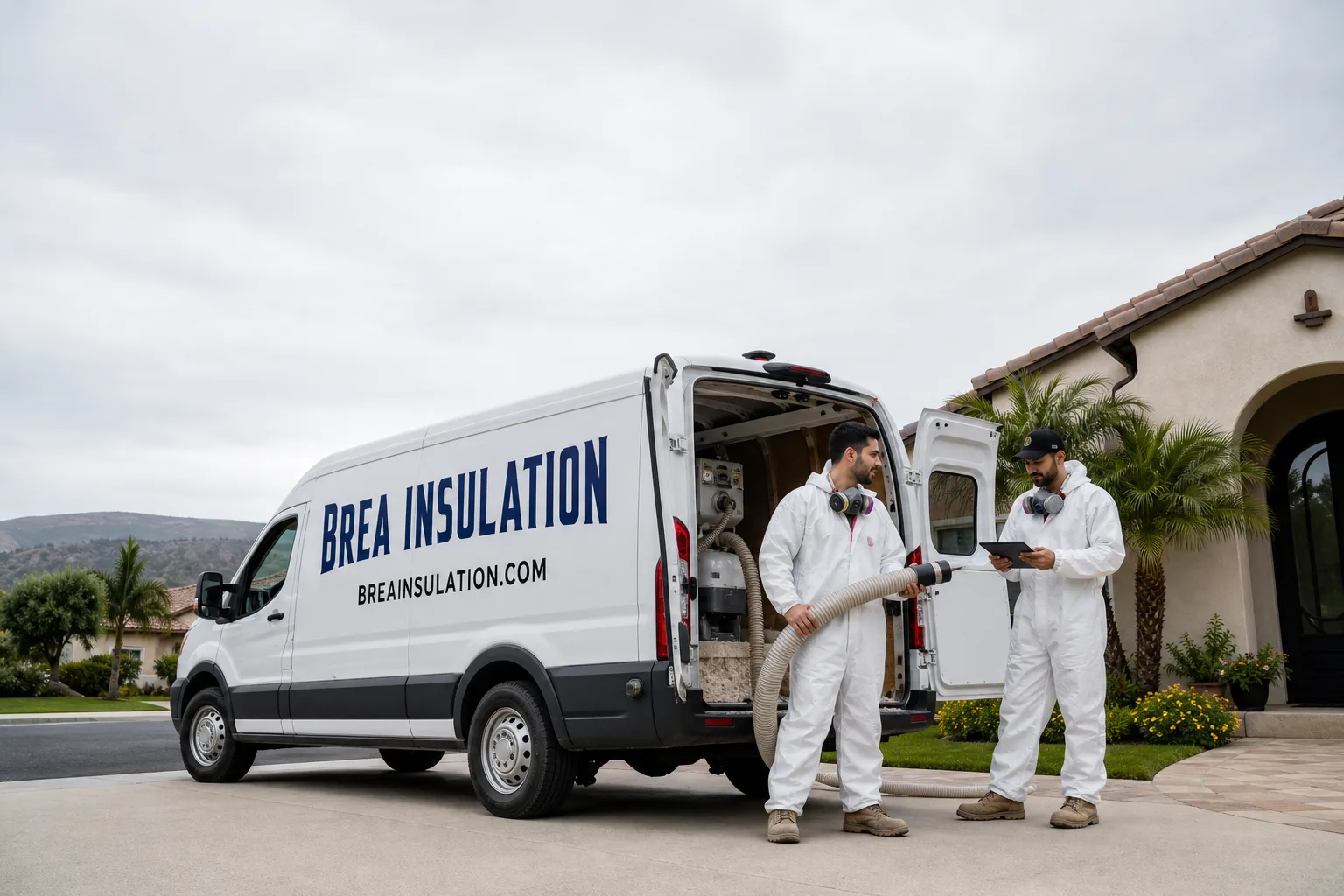
Fast, Reliable Spray Foam Insulation Across Silver Lake
Spray foam insulation in Silver Lake usually costs between $1.20 and $3.80 per board foot depending on foam type, and most jobs around the reservoir are completed in one to two days. Homes here are different from the rest of Los Angeles. The steep lots, the 1920s Spanish Revival bungalows, the Mid-Century additions with flat roofs. Brea Insulation works in Silver Lake every week and we know what these houses throw at you. Call (866) 858-4033 for a free estimate that accounts for your home’s actual conditions, not a generic square-footage formula.
Why Brea Insulation Is Silver Lake’s Preferred Spray Foam Insulation Company
Silver Lake homeowners don’t have standard attics. We’ve foamed homes off Silver Lake Blvd, up in the Moreno Highlands, and down near the Sunset Junction where crawlspaces shrink to nothing and roof pitches make standing impossible. That’s the point: We’re a dedicated insulation contractor, and spray foam is one of three methods we install, alongside attic insulation and blown-in options. Nobody here splits focus across roofing, HVAC, or drywall. Insulation is all we do, so when your 1940s bungalow has an 18-inch attic hatch and a lath-and-plaster ceiling we’ve seen that exact problem before.
We carry eight manufacturer lines: Icynene and Demilec for spray foam, plus Owens Corning, Johns Manville, Knauf, Rockwool, CertainTeed, and GreenFiber for other applications. Phil Darnell runs every Silver Lake project with the same expectation: match the material to the house, not the other way around. Our Silver Lake customers consistently tell us two things. The crews navigated their tight access without cutting extra holes, and the house is noticeably quieter afterward. That second point matters on streets like Rowena and Hyperion where traffic hum is constant.
Garage Spray Foam Insulation in Silver Lake
Garage Spray Foam Insulation in Silver Lake is one of the most common jobs we handle because so many hillside garages are built into the slope itself. The rear wall of the garage is often buried underground on the uphill side, which means the framing collects moisture from soil contact and the room above it bakes in the afternoon sun. Closed-cell foam on the garage ceiling and the shared wall with the house stops that thermal transfer and air-seals the garage from the living space.
What It Costs and Why We Recommend Closed Cell Here
Most garage ceilings in Silver Lake run $1,800 to $3,500 for a two-car garage, depending on depth, access, and whether we’re also sealing the rim joist. We lean toward closed-cell for garages because it doubles as a vapor retarder and adds racking strength to the structure. In a hillside garage where the back wall is against earth, that matters.
When a Silver Lake Homeowner Calls Us for a Garage
Two triggers. First, a bedroom sits above the garage and the floor is always cold in winter and hot in summer. Second, the homeowner uses the garage as a workshop, gym, or office and can’t control the temperature. Both are common in Silver Lake, where ADUs and garage conversions are everywhere and the original envelope was never designed for that use.
Closed Cell Spray Foam Insulation in Silver Lake
Closed Cell Spray Foam Insulation in Silver Lake is the right choice for most hillside applications because it’s the only foam that adds both air sealing and structural rigidity in one pass. At roughly R-6.5 per inch, two inches gives you the same thermal resistance as four inches of open-cell, plus a built-in Class II vapor retarder and significant shear strength along roof decks and knee walls.
Why Hillside Homes Need It More Than Valley Homes
A house on a steep lot above the Silver Lake Reservoir gets hammered by afternoon sun on the west-facing walls. Attic temps in those homes routinely exceed 140 degrees in July and August. Closed-cell foam applied to the underside of the roof deck drops that heat transfer dramatically, and because it cures rigid, it helps hold older framing together. That’s a real benefit in 1920s homes where the rafters are true 2x4s and the structure has already settled a century of hillside movement.
Knob-and-Tube Considerations
If your bungalow still has active knob-and-tube wiring, the foam must be installed with clearance or the wiring must be decommissioned first. We’ve seen too many Silver Lake homes where a previous owner stuffed fiberglass batts over live knob-and-tube, which is worse than no insulation at all. We assess wiring before any foam goes in. That’s not optional; it’s the difference between a clean install and a code violation wrapped in foam.
Trusted Brands We Service in Silver Lake
We install Icynene and Demilec spray foam systems because both manufacturers hold their installers to strict application standards and their closed-cell products perform consistently in hot, dry climates like Silver Lake’s. For homeowners leaning toward eco-conscious options elsewhere in the home, GreenFiber cellulose and Rockwool mineral wool round out the bench. The point isn’t brand loyalty. We carry eight brands because a 1960s flat-roof addition and a 1920s crawlspace have completely different material needs, and no single product line covers both well. We stock local parts and materials for Silver Lake jobs, which means fewer delays when your bungalow surprises us mid-install.
Common Spray Foam Insulation Problems We See in Silver Lake Homes
- Foam over live knob-and-tube wiring. Homes built before 1950 still carry original circuits, and previous owners often buried them under batts. We inspect and isolate wiring before any foam application, because encapsulating live knob-and-tube in closed-cell foam creates a fire hazard that’s difficult to access later.
- Moisture trapped in unvented flat-roof assemblies. Mid-Century Modern additions in Silver Lake frequently have flat or low-pitch roofs with no ventilation channel. Foaming the underside of that deck without addressing drainage and ventilation can trap condensation and rot the sheathing from inside. We assess the roof assembly before recommending foam.
- Poor adhesion on lath-and-plaster walls. Seasonal seismic movement and old plaster surface treatments mean substrate prep is everything. Skipping the primer or not cleaning decades of dust off a lath-and-plaster wall leads to delamination within a few seasons.
- Ember intrusion through unsealed eaves and vents. Homes in the hills above Silver Lake sit in wildfire-prone terrain, and embers enter through the smallest gaps in vented attics. A well-sealed assembly with closed-cell foam around the eaves and gable vents is a practical fire-hardening measure beyond the energy benefit.
Pricing for Spray Foam Insulation in Silver Lake, CA
Open-cell spray foam in Silver Lake typically runs $1.20 to $2.00 per board foot installed, while closed-cell runs $2.20 to $3.80 per board foot depending on depth, access difficulty, and the prep work involved. A standard 1,200-square-foot attic roof deck at 3 inches of open-cell lands around $4,300 to $7,200. Closing in the same space with 2 inches of closed-cell runs closer to $5,300 to $9,100. For a Silver Lake hillside bungalow with tight access, add 15 to 25 percent to account for hose runs through knee walls, gable vents, and ladder work. We give free, itemized estimates so nothing is vague. Call (866) 858-4033 and Phil will walk the property with you and give you a number that sticks.
We Also Serve Cities Near Silver Lake
Our spray foam crews work all over central Los Angeles. We cover Silver Lake daily and also serve Spray Foam Insulation in Silver Lake neighbors in Echo Park, Los Angeles proper, Koreatown, and Hollywood. If you’re on the edge of Silver Lake near the 101 or Glendale Blvd, you’re still in our regular route. Learn more about our Spray Foam Insulation methods and material options.
Serving Silver Lake, CA — Our Local Coverage Area
We’re based in the Silver Lake area and know this community well. Use the map below to see our service coverage — if you’re nearby, we can almost certainly help.
FAQs About Spray Foam Insulation in Silver Lake
Yes. We regularly foam Silver Lake homes where the attic hatch is under 2 feet square and the roof pitch is too low to crawl. Our crews run hose lines through gable vents, remove a couple of roof tiles to access the deck from above, or work through knee walls at the property line. A 1940s Spanish Revival off Silver Lake Blvd needed exactly this approach recently. The hatch was 18 by 24 inches. We fed hoses through the gable vent and sealed the deck from below. Call (866) 858-4033 and we’ll tell you how we’d handle your roofline.
Only after the wiring is inspected and decommissioned or properly isolated. Encapsulating live knob-and-tube in foam is a fire hazard and against code. We inspect every pre-1950 home in Silver Lake for active knob-and-tube before any foam goes in. If we find it live, we coordinate with a licensed electrician to retire those circuits first, then foam the cavity. We won’t cut that corner.
It helps, but it’s not a standalone fireproofing system. Closed-cell spray foam applied to the underside of roof decks and around eave edges seals the gaps where embers enter during a wind-driven event. In the hills above Silver Lake, where Canyon Road and the streets off Sanborn get regular red-flag warnings, that air sealing is a meaningful part of a larger hardening strategy that includes vent screens and defensible space. We’ll be straight with you about what foam does and doesn’t do.
It depends on whether the existing roof assembly is vented or unvented. Most Mid-Century flat roofs in Silver Lake were built unvented, which means foaming the underside traps moisture unless you first address drainage and add a ventilation channel or convert to a properly designed hot roof. We inspect the deck condition and roof plumbing scuppers before recommending foam. In many cases, closed-cell on the top side during a re-roof is the cleaner long-term answer. We’ll tell you if the underside approach is wrong for your specific roof.
Yes, and garage ceiling foam is one of our most-requested jobs in Silver Lake because so many hillside garages sit against soil on the uphill side. We typically use Demilec closed-cell for garage applications because of its moisture resistance and structural bonding. Every estimate includes the exact product and depth, so you know what you’re paying for. Call (866) 858-4033 for a free on-site assessment.
Written by Phil Darnell, Owner at Brea Insulation, serving Silver Lake and greater Los Angeles since day one.