
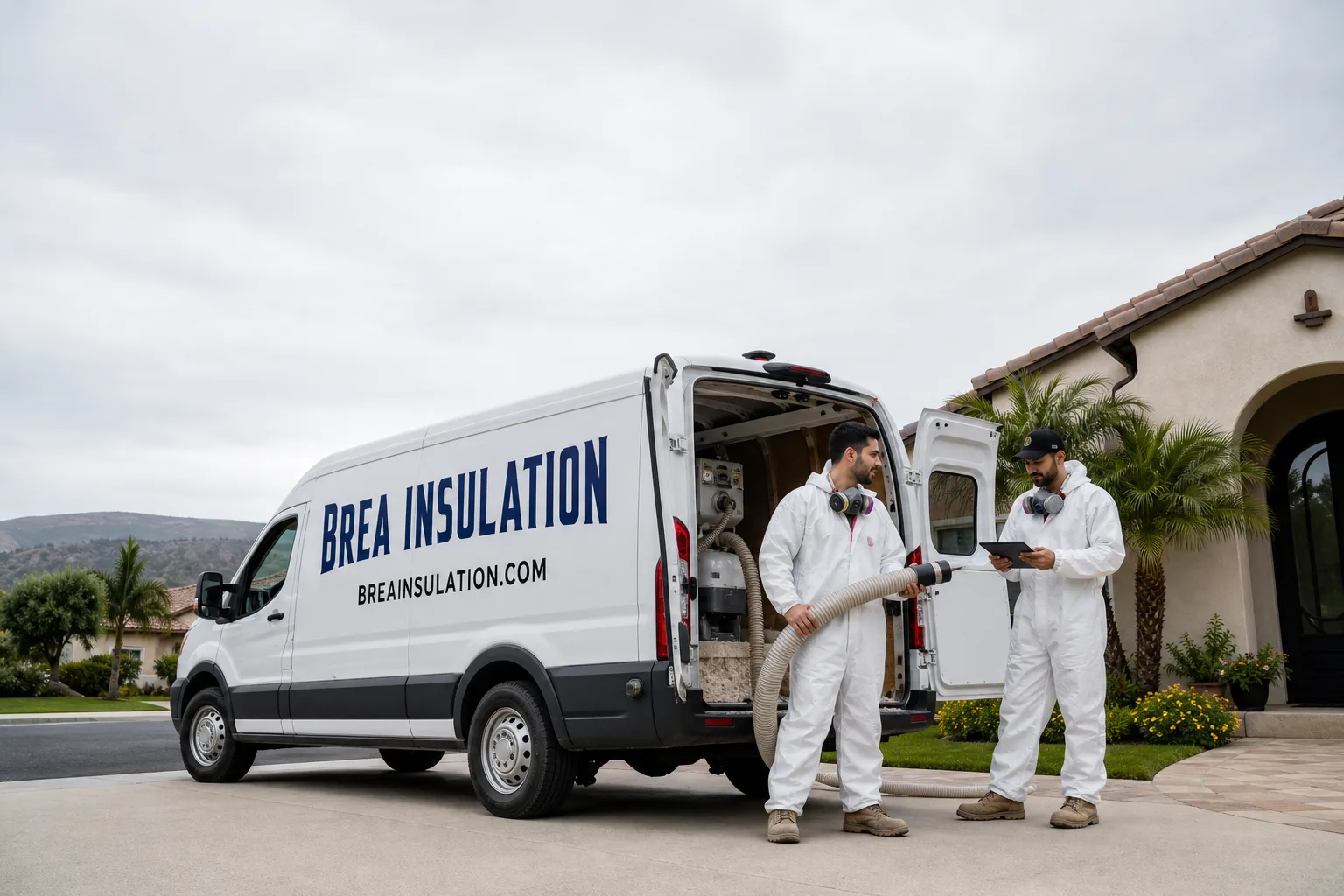
Fast, Reliable Spray Foam Insulation Across Banning
Spray foam insulation in Banning, CA typically runs $2.80 to $6.50 per board foot for open-cell and $3.40 to $7.80 for closed-cell, with most whole-attic jobs landing between $4,200 and $11,500. We respond to Banning calls within 24 to 48 hours for estimates, and emergency air-sealing work can often be scheduled same-week. The San Gorgonio Pass isn’t like the rest of the Inland Empire. Wind-driven sand, 20 to 40 mph gusts, and desert temperature swings of 40+ degrees between day and night mean Banning homes need insulation that seals against infiltration, not just a thicker layer of fluff. Call (866) 858-4033 and we’ll get a crew out to your place fast.
Why Brea Insulation Is Banning’s Preferred Spray Foam Insulation Company
Phil Darnell built Brea Insulation around one trade: insulation. Not roofing, not HVAC, not a handyman’s add-on menu. When a Banning homeowner calls us, they get a specialist who knows the difference between open-cell and closed-cell foam, understands how the Pass wind moves through wall cavities, and can tell you why the batt insulation in your 1970s Sun Lakes home has turned into a sand filter. That single-trade focus is why folks from the older core near Wilson Street to the tract builds off Sunset Avenue trust us with their energy envelope.
We carry eight manufacturer brands: Owens Corning, Johns Manville, Knauf, Rockwool, CertainTeed, Icynene, Demilec, and GreenFiber. For Banning spray foam work, we lean on Icynene and Demilec for their closed-cell rigidity and bond strength; those matter when your substrate is a sand-loaded roof deck. We don’t stock one foam and force it onto every job. The west-facing slope of a Banning rancher needs different foam than a garage ceiling in Valle Vista. Matching material to the actual condition of the house is the whole job.
Spray Foam Insulation Contractors in Banning
Spray Foam Insulation Contractors in Banning have to deal with something most installers in Riverside or Redlands never see: wind-blown sand inside the attic assembly. A contractor who shows up and sprays foam over grit-laden decking is creating a delamination failure that’ll leave wind-washing channels open in under two years. The prep work is the difference between foam that bonds for two decades and foam that peels off in sheets. We vacuum decking, can lights, and top plates before any foam goes down, because the Pass wind won’t cut you any slack.
What the Job Involves Here
A standard Banning spray foam job starts with a substrate inspection. We check vent screens for sand packing, look for compressed batts on the west slope, and probe wall cavities for wind-washing gaps. Then we seal top plates, penetrations, and rim joists before spraying the foam. That sequence matters. Foam without air sealing is just an expensive sponge; foam with air sealing is a wind barrier.
When Banning Homeowners Call Us
The most common trigger is a bedroom that won’t hold temperature. On a January night when Banning drops into the 30s, a room over an uninsulated garage or a west-facing wall with wind-washing cavities will feel 10 to 15 degrees colder than the rest of the house. The second trigger is dust. Homeowners near the Pass sometimes find fine sand on window sills inside the house, which means air is moving through wall cavities and blowing the insulation’s captured grit into the living space. Both are spray foam jobs in our book.
Spray Foam Attic Insulation in Banning
Spray Foam Attic Insulation in Banning has to be specified differently than it would be in, say, Calimesa. The Pass wind pushes air through attic vents at 20 to 40 mph all afternoon, carrying fine desert sand that sifts into batts and settles over anything horizontal. By the time we get called out, a ten-year-old batt job on the west slope can be compressed flat and loaded with grit, with half its original R-value gone. We see this literally every month on mid-century stucco homes around the older core of Banning.
Closed-Cell on the West Slope
For west-facing roof slopes, we specify closed-cell foam. It bonds to the vacuumed decking, adds structural rigidity to aging rafters, and cuts the wind-driven heat loss that open-cell can’t handle when a 35 mph gust hits it at 4 p.m. in July. A typical west-slope closed-cell job in Banning runs $6,400 to $9,800 depending on square footage and the amount of grit removal required.
Air Sealing Before the Foam
Before we spray anything, our crew seals the top plates, wire penetrations, and can light housings. In Banning, this step does double duty: it stops the stack effect that pulls conditioned air out through the attic, and it blocks the sand-laden wind that tries to push back in. Homeowners who’ve lived with dusty attics for years notice the difference within the first week after the foam cures.
Trusted Brands We Service in Banning
We spray Icynene and Demilec closed-cell and open-cell foams in Banning because they’re the two product lines that hold up under this climate. Icynene’s closed-cell gives us the bond strength and air-seal performance the Pass wind demands. Demilec gives us a foam that cures predictably even when the Banning temperature swings 40 degrees between morning and evening application windows. We also keep Owens Corning and GreenFiber products on the truck for hybrid jobs where a Banning homeowner wants spray foam on the critical surfaces and blown-in cellulose on the rest. Carrying eight brands means we don’t have to talk a Sun Lakes homeowner into foam that’s wrong for their wood-frame walls just because it’s the only thing we stock.
Common Spray Foam Insulation Problems We See in Banning Homes
- Foam delaminating from sand-loaded decking. If the substrate isn’t vacuumed clean before spraying, the foam bonds to grit instead of wood. The Pass wind finds the gap within a season, and you’ve paid for a foam job that’s now a wind channel.
- Open-cell foam sprayed too thin on west-facing slopes. Open-cell needs depth to hit its air-seal numbers. At 3 inches or less, the daily 20-40 mph gusts blow right through it, and the attic never stops losing conditioned air.
- Attic vents packed with blowing desert sand. When vent screens clog, the attic stops breathing. Moisture builds in winter, heat builds in summer, and any foam job we quote has to start with clearing the ventilation path first.
- Wind-washing through wall cavities in 1970s-1990s Sun Lakes tract builds. The original fiberglass batts in these homes were never dense-packed, so the Pass wind has been moving through them for decades. Spray foam seals those cavities at the top plate and rim joist, which is where the wind actually enters.
Pricing for Spray Foam Insulation in Banning, CA
Open-cell spray foam in Banning typically runs $2.80 to $4.90 per board foot installed. Closed-cell runs $3.40 to $7.80 per board foot, with the higher end reflecting west-slope roof decks that need extra prep for sand removal and air sealing. A typical whole-attic closed-cell job on a 1,200-square-foot Banning rancher lands between $6,400 and $9,800. A rim joist and band board seal job runs $1,800 to $3,600. Garage ceiling spray foam usually runs $2,200 to $4,400. The biggest variable in Banning is grit prep: an attic that’s accumulated wind-blown sand needs more vacuum time before we spray, and that labor shows up in the final number. Call (866) 858-4033 for an exact quote on your attic; estimates are free and Phil Darnell’s crew will walk you through the price line by line.
We Also Serve Cities Near Banning
Our Spray Foam Insulation team covers Banning plus the surrounding pass communities: Cabazon, Calimesa, Yucaipa, and Valle Vista. If you’re in one of those areas and dealing with the same wind and dust issues Banning homeowners face every summer, the same prep-first approach applies. Serving the San Gorgonio Pass gives us a level of familiarity with wind-driven air sealing that inland-valley contractors simply don’t develop.
Serving Banning, CA — Our Local Coverage Area
We’re based in the Banning area and know this community well. Use the map below to see our service coverage — if you’re nearby, we can almost certainly help.
FAQs About Spray Foam Insulation in Banning
Yes, it does, specifically because closed-cell spray foam acts as an air barrier as well as an insulator. The Pass wind gets into Banning attics through vent screens, soffit gaps, and top plates, carrying fine sand that loads up batts and destroys R-value. Closed-cell foam seals those entry points, and once the substrate is cleaned before application, the foam bonds to the decking and stays put. Homeowners in the older core and Sun Lakes routinely report less dust inside the house and stable indoor temperatures on windy afternoons after we finish. For a Banning-specific quote on wind sealing and foam, call (866) 858-4033.
Yes. We vacuum the roof decking, can lights, top plates, and any horizontal surfaces where wind-blown sand has settled before we spray a single board foot of foam. In Banning, this prep step is non-negotiable; foam sprayed over grit bonds to the grit, not the wood, and it delaminates within a year or two once the Pass wind works its way under the edges. We budget the vacuum time into every Banning quote so you’re not hit with a surprise line item mid-job. Estimates are free; call (866) 858-4033 and we’ll come inspect the attic before you commit.
We specify closed-cell foam from Icynene or Demilec on Banning west slopes. Closed-cell bonds to the vacuumed decking, adds rigidity, and holds its air-seal performance under sustained 20-40 mph pass gusts and July afternoon sun. Open-cell works for interior walls and some band joist applications, but on the windward slope of a Banning roof, closed-cell is the right material. We’ll show you the difference in the quote; call (866) 858-4033 and ask for the west-slope foam spec.
Absolutely. Most Sun Lakes builds from the 1970s through 1990s use wood-frame walls with original thin batt insulation, and the older-core stucco homes are wood-frame as well. Spray foam works in those cavities exactly the same way it does in any framed home. What’s different in Banning is what we find inside those walls: decades of wind-blown sand that’s migrated through the fiberglass and settled along the bottom plates. We dense-pack or spray the cavities after cleaning out what we can reach, then air-seal the top plates. The wind-washing stops and the rooms hold temperature. Call (866) 858-4033 for a Banning wall-cavity assessment.
Spray foam handles both extremes because it’s a true air seal, not just a thermal barrier. On Banning winter nights when temperatures drop into the 30s, closed-cell foam stops the warm air from leaking out through the attic and the cold air from pushing in through vents. In the hot dry summers, it blocks the 100+ degree heat from radiating down through the ceiling. That’s a 40-degree daily swing, and a material that only slows conduction without sealing air movement will lose that fight. The Pass wind never stops moving air, so the foam has to stop it. Get a Banning-specific energy assessment by calling (866) 858-4033; the estimate is free and Phil will walk your attic with you.
If your Banning home is fighting wind-driven heat loss, sand in the attic, or rooms that won’t hold temperature, call Brea Insulation at (866) 858-4033 for a free estimate. Phil Darnell and our crew know the Pass, know the housing stock, and know exactly which foam belongs on your roof slope. We serve all of Banning in the 92220 ZIP, from the older core to Sun Lakes and the tract builds in between. Insulation is all we do, and the work we do here is built around the wind.
Written by Phil Darnell, Owner at Brea Insulation, serving Banning and the San Gorgonio Pass with spray foam and air-sealing expertise.