
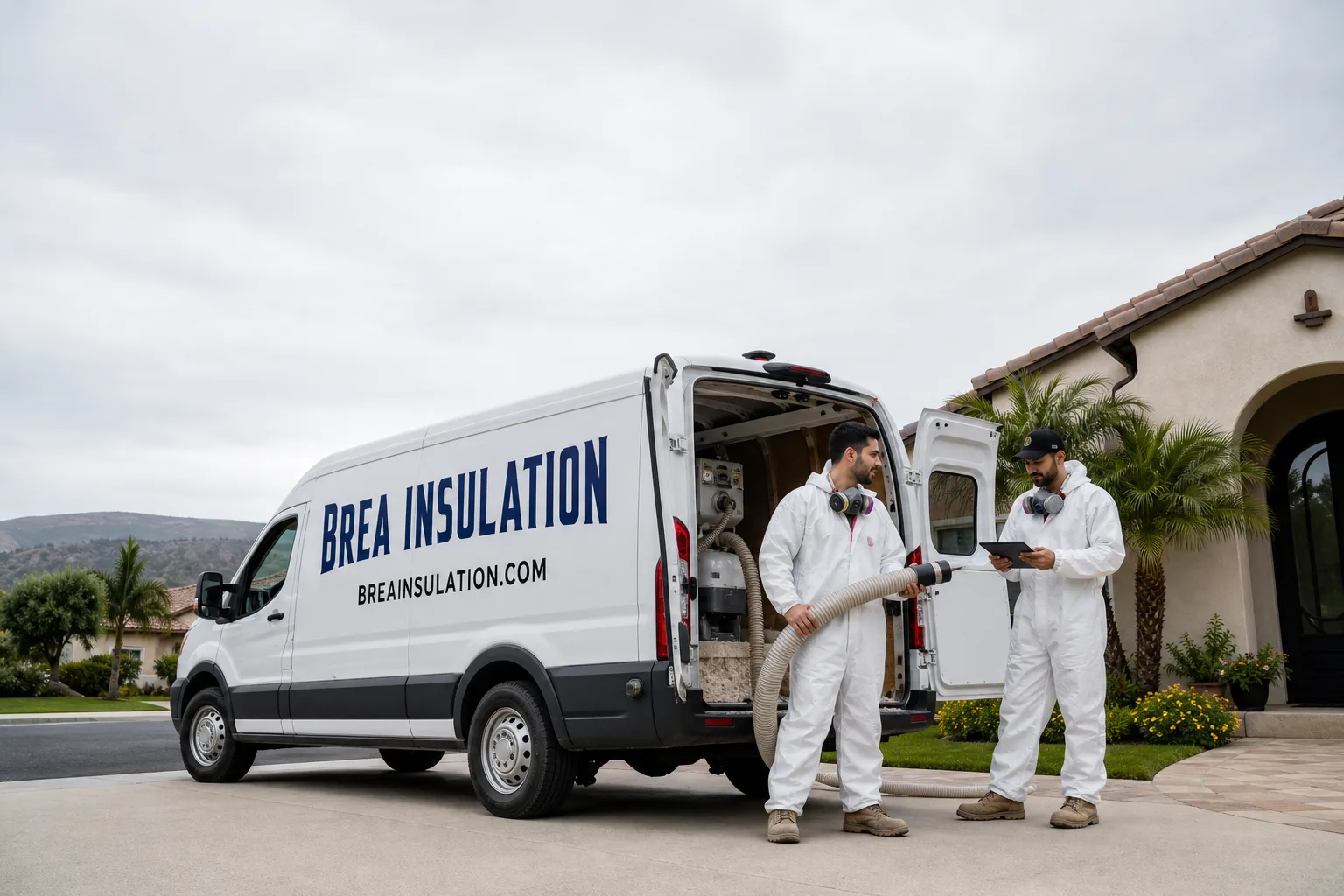
Fast, Reliable Attic Insulation Across Tujunga
Attic insulation in Tujunga typically runs $1,800 to $4,200 for a full 1,200 – 1,800 sq ft attic, depending on whether you need blown-in top-up, full replacement, or air-sealing plus ember-resistant vent upgrades. We respond to most Tujunga calls within 24 hours and can often schedule an attic assessment the same week. Call (866) 858-4033 for a free estimate.
Tujunga sits at the mouth of a canyon where the San Gabriels meet the foothill sun. Your attic deals with temperature swings that coastal LA never sees: 90+ degree afternoons followed by canyon cold that dips into the 40s at night. That daily cycle, plus Santa Ana winds that scour insulation away from eaves, means your attic’s thermal barrier is working harder than almost anywhere else in Los Angeles. When you add wildfire ember exposure from Angeles National Forest, Tujunga attics need a specific kind of insulation work: fire-resistant material choices, air-sealing around legacy wiring, and ember-aware venting. That’s exactly the work we do at Attic Insulation contractor Brea Insulation. Phil Darnell and our team know Tujunga’s housing stock because we’ve opened dozens of attics in 91042 and 91043. The 1940s rock wool, the knob-and-tube wiring, the wind-scoured eaves: we’ve seen it, and we know what fixes it.
Why Brea Insulation Is Tujunga’s Preferred Attic Insulation Company
Insulation is the only thing we do. Brea Insulation doesn’t patch roofs, we don’t run HVAC lines. That single-trade focus matters in Tujunga because the attic problems here are specialized. When a Tujunga homeowner calls us about a wind-scoured attic edge or ember intrusion through a 1940s soffit vent, our team has already diagnosed that exact failure on a similar hillside or canyon-edge home. We carry eight manufacturer lines: Owens Corning, Johns Manville, Knauf, Rockwool, CertainTeed, Icynene, Demilec, and GreenFiber. For Tujunga homes, we often reach for Owens Corning blown-in fiberglass for thermal performance, Demilec closed-cell spray foam for air-sealing on retrofit jobs, and GreenFiber recycled cellulose for homeowners who want an eco-conscious option. The right material depends on your attic’s construction and your home’s fire exposure, not on what’s easiest to stock. That’s the whole reason we carry eight brands.
Phil Darnell has built Brea Insulation around matching material to method, not method to inventory. When we pull up to a hillside home off Day Street or a stucco mid-century off Foothill Boulevard, we can recommend sprayed foam, blown-in, or batts based on the structure, not based on what’s on the truck. Tujunga property managers trust that approach because old canyon homes rarely have one-size-fits-all attics. Our reviews from Sunland, La Crescenta-Montrose, and Shadow Hills homeowners often mention the same thing: we diagnosed the actual problem before we recommended product. If your Tujunga attic has legacy rock wool or unsealed wiring penetrations, we’ll tell you plainly what’s going on and what it costs to fix right.
Insulation Contractors in Tujunga
Insulation Contractors in Tujunga face a set of attic conditions that contractors in Sherman Oaks or Torrance never encounter. The work involves more than adding R-value: it means evaluating wind scouring along attic perimeters, checking whether original soffit and gable vents are ember-safe, and air-sealing top plates and wiring penetrations before any insulation goes in. A typical full attic job in Tujunga, including air-sealing and blown-in insulation, runs $2,800 – $5,200 depending on square footage, access, and whether old insulation needs removal. Blown-in top-up alone starts around $1,200 – $2,000 for a standard 1,200 sq ft attic. New construction and major retrofits fall at the higher end, especially on sloped hillside lots where crawlspace and staging access adds labor time.
Air-Sealing Before Insulation in Canyon-Attics
Older Tujunga attics often have unsealed top plates and knob-and-tube wiring penetrations that leak conditioned air. Adding insulation over those gaps buries the problem without fixing it. Air-sealing first with fire-rated sealant is the standard we recommend for any Tujunga home built before 1970. This step also reduces the chimney effect that pulls hot air into the attic during heat waves, which is a significant contributor to Tujunga’s steep indoor temperature swings.
Ember-Resistant Vent Replacement
Original vented soffits and gable vents from the 1940s – 1960s can admit wind-blown embers during fire season, which is a real hazard for foothill homes. When we insulate a Tujunga attic, we inspect every vent opening and recommend replacement with ember-resistant models. Insulation without vent hardening can leave a home just as exposed as it was before. This isn’t a code detail we skip: it’s the entire point of doing insulation work correctly in a canyon-mouth community.
Attic Ventilation in Tujunga
Attic Ventilation in Tujunga is the difference between an insulation job that lasts and one that fails within two seasons. Santa Ana winds push airborne debris and embers through old soffit vents, while canyon temperature swings create condensation and moisture buildup in under-vented attics. Replacing old vents with ember-resistant models and balancing intake and exhaust costs $600 – $1,800 depending on the number of vent openings and roof configuration. When combined with insulation, proper ventilation prevents the wind-scouring that strips blown-in material from the eaves, which is one of the most common failures we see on Tujunga hillside homes. If you’re calling us about a cold bedroom or a drafty hallway in a 1950s stucco house, there’s a strong chance the attic ventilation is part of the problem.
Soffit and Gable Vent Hardening
Older Tujunga attics used open-mesh soffit vents and wide gable vents that were adequate for thermal airflow in 1955. They are not adequate for ember intrusion in 2026. Replacing these with 1/16-inch mesh ember-resistant vents is a straightforward retrofit that we perform as part of most insulation jobs in the canyon-edge streets near Seven Hills and La Tuna Canyon.
Baffles and Eave Airflow
In Tujunga attics with shallow roof pitches, blown-in insulation often blocks soffit intake airflow, which leads to moisture problems and heat buildup. Installing baffles before blowing insulation preserves the airflow path from eave to ridge. It’s a $300 – $700 add-on for most attics, and it means the new insulation won’t suffocate the attic’s ventilation system.
Trusted Brands We Service in Tujunga
We carry materials from Owens Corning, Demilec, and GreenFiber, among others, because Tujunga attics need options. Owens Corning blown-in fiberglass holds up against wind scouring better than many alternatives and delivers reliable R-value per inch. Demilec closed-cell spray foam gives canyon-edge homes an air-seal that batt or blown-in alone can’t match, especially where retrofits meet irregular framing. GreenFiber recycled cellulose offers an eco-conscious path for homeowners who want lower embodied carbon without sacrificing performance. We stock these materials locally for Tujunga customers, which keeps turnaround tight when you need attic work done before the next heat wave.
Common Attic Insulation Problems We See in Tujunga Homes
- Wind-scoured blown-in insulation: Santa Ana winds drive through eaves and over attic edges, displacing blown-in fiberglass and cellulose. We see bare spots along the attic perimeter, especially on hillside homes facing the canyon mouth, which cause heat loss and drafts in bedrooms.
- Ember intrusion through original soffit and gable vents: Older Tujunga homes retain open-mesh vent designs that let brush-fire embers into the attic. These embers can ignite accumulated debris or old insulation, so vent replacement is a safety priority alongside insulation work.
- Settled and compressed legacy rock wool: Homes built in the 1940s through 1970s often contain original rock wool batts that have sagged to half their original thickness. We remove this material before installing new insulation because adding over settled rock wool wastes money and leaves air gaps.
- Unsealed knob-and-tube wiring penetrations: Many Tujunga attics from the pre-1960s era have wiring runs that pass through top plates with no sealing. Conditioned air leaks through these penetrations year-round, and the gaps also serve as pathways for embers and smoke.
Pricing for Attic Insulation in Tujunga, CA
Attic insulation in Tujunga’s 91042 and 91043 zip codes runs on a spectrum. Blown-in top-up over existing insulation costs $1,200 – $2,000 for a typical 1,200 sq ft attic. Full removal of old rock wool plus new blown-in fiberglass runs $2,500 – $4,200 depending on access and attic height. Air-sealing adds $800 – $1,800 depending on the number of penetrations. Ember-resistant vent replacement runs $600 – $1,800. A complete package for a 1950s Tujunga home, including air-sealing, vent hardening, and R-49 insulation, typically lands between $4,500 and $6,500. Sloped hillside lots, tight crawlspaces, and knob-and-tube wiring can push labor higher. Call (866) 858-4033 for an exact quote. Estimates are free, and we’ll show you what’s in your attic before you spend a dollar.
We Also Serve Cities Near Tujunga
Brea Insulation serves Attic Insulation in Tujunga and the surrounding foothill communities. We regularly work in Sunland, where the housing stock and attic conditions are nearly identical. We also cover La Crescenta-Montrose, Shadow Hills, and Burbank, bringing the same ember-aware, wind-scour-resistant approach to every canyon-adjacent home we touch.
Serving Tujunga, CA — Our Local Coverage Area
We’re based in the Tujunga area and know this community well. Use the map below to see our service coverage — if you’re nearby, we can almost certainly help.
FAQs About Attic Insulation in Tujunga
Tujunga sits at a narrower canyon mouth with more direct exposure to fire-driven winds from Angeles National Forest than most Sunland blocks. The wind funnels through La Tuna Canyon and across the foothill streets, carrying embers that can enter open-mesh soffit and gable vents. Ember-resistant venting is not a Sunland-versus-Tujunga code technicality; it’s a reflection of how wind and fire actually move through your specific part of the Verdugo foothills. If your Tujunga attic still has original vents from the 1940s or 1950s, they’re likely undersized mesh that wouldn’t stop a wind-driven ember. Call (866) 858-4033 and we’ll inspect your venting while we’re in the attic.
You can, but we don’t recommend it for most Tujunga homes. Original rock wool batts from the 1950s have typically sagged, compressed, and lost significant R-value over 70 years. When we opened an attic on a hillside street off Day Street in Tujunga, the 1940s rock wool batts had settled to a third of their original thickness, and the homeowner had blown fiberglass over them without air-sealing first. Santa Ana winds had scoured much of the blown-in material away from the eaves, leaving the attic edge essentially bare. We removed the old rock wool, air-sealed all top plates and wiring runs with fire-rated sealant, replaced the soffit vents with ember-resistant models, and installed Owens Corning blown-in fiberglass to R-49. The home now holds temperature through the canyon’s 30-degree diurnal swings. Adding over compromised legacy insulation buries problems; removing and replacing fixes them.
Santa Ana winds displace lightweight blown-in insulation, especially along attic eaves and corners where wind can push underneath. Over the course of two or three wind seasons, blown-in fiberglass or cellulose can be scoured away from the attic perimeter, leaving bare spots that cause heat loss in winter and heat gain in summer. In Tujunga specifically, the canyon-mouth geography amplifies wind speeds, so the scouring effect is more pronounced than in flat neighborhoods of the LA basin. Air-sealing and proper baffles help anchor insulation and protect the attic edge. If you’ve noticed uneven temperatures room-to-room in an older Tujunga home, wind scouring is a likely culprit. Call (866) 858-4033 for an attic inspection.
Yes, in most cases. Vents from the 1940s on Tujunga homes are open-mesh designs that were never intended to block embers. During a brush fire in the Verdugo foothills or Angeles National Forest, wind-driven embers can push through those old openings, enter the attic, and ignite debris or insulation. Replacing them with ember-resistant vents is a straightforward retrofit that we bundle with insulation work. The replacement cost is modest compared to the potential loss, and it means your insulation investment isn’t sitting under a vent that can admit fire into the attic. We inspect every vent opening as part of our Tujunga attic assessments.
For Tujunga’s 30-degree daily swings between hot foothill afternoons and cold canyon nights, Owens Corning blown-in fiberglass delivers consistent R-value and resists settling better than many competitors. Demilec closed-cell spray foam provides an air-seal that no batt can match, which is valuable on retrofit jobs where the attic framing is irregular and air leaks are numerous. GreenFiber recycled cellulose offers a solid eco-conscious option for homeowners who want lower embodied carbon without giving up thermal performance. The right brand for your Tujunga attic depends on your home’s construction, fire exposure, and existing insulation. We carry all three plus five more brands, so we can match material to job. Call (866) 858-4033 and we’ll tell you what your attic actually needs.
Written by Phil Darnell, Owner at Brea Insulation, serving Tujunga’s 91042 and 91043 neighborhoods with specialized attic insulation and ember-resistant venting since the company’s founding.