
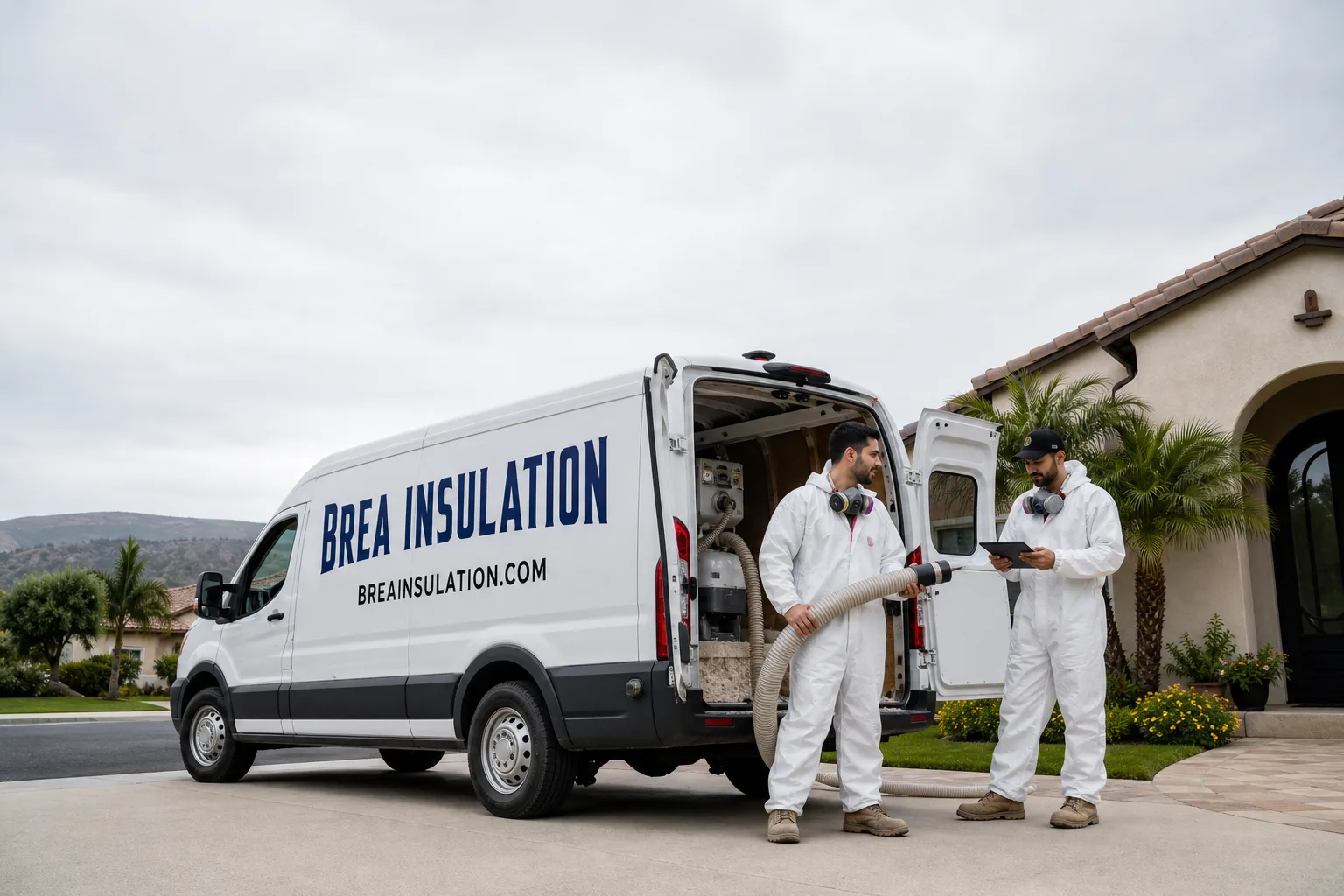
Fast, Reliable Attic Insulation Across Rolling Hills Estates
Attic insulation in Rolling Hills Estates typically costs $2,800 to $6,400 for a standard single-story ranch home, with multi-structure equestrian properties running $5,500 to $12,000 depending on the number of outbuildings. Most jobs are completed in one to two days, and we can usually get to your property within 48 hours. If your attic insulation has gone damp, sagged, or stopped holding temperature, call (866) 858-4033 for a free assessment of the entire parcel – house, barn, garage, and guest structures included.
We know Rolling Hills Estates not as a map pin but as a working landscape of large-lot ranches, salt air, and marine-layer fog that punishes insulation in ways tract homes in Torrance never see. Phil Darnell and the Brea Insulation team scope every job – every structure on the lot, not just the main house attic – because on the Palos Verdes Peninsula, moisture and ventilation drive the outcome more than R-value alone.
Why Brea Insulation Is Rolling Hills Estates’s Preferred Attic Insulation Company
Brea Insulation does one thing: insulation. Not roofing, not HVAC, not handyman work layered on top of a trade. That single-trade focus means the team that shows up at your Rolling Hills Estates property has spent years working specifically with fiberglass, mineral wool, spray foam, and cellulose – not reading a spec sheet for the first time. Phil Darnell built the company around an eight-brand material roster so the insulation matched to your attic is chosen for the house, not for what’s easiest to stock.
Rolling Hills Estates homeowners call us after other contractors have missed what’s actually wrong. A ranch house on Palos Verdes Drive East can have perfectly adequate R-38 batts in the attic that are doing nothing because marine-layer fog has been pushing through compromised soffit vents for 20 years. We find that first. Insulation is all we do – and that specialization shows in every install.
Insulation Contractors in Rolling Hills Estates
Insulation Contractors in Rolling Hills Estates need to understand something most don’t: a large-lot estate isn’t a single-building job. When we’re hired to re-insulate a 1970s ranch on a half-acre or more, we walk the entire parcel. The main house attic, the detached garage, the barn, the guest quarters – all of them share the same marine-layer exposure, the same wind-driven moisture, and often the same original insulation from the Nixon administration. Scoping across buildings is the job, not an add-on.
Parcel-Wide Assessment
We don’t quote attic insulation in Rolling Hills Estates by square footage of the main house alone. We check every vented attic space on the property, because a barn attic with compromised batts will keep pulling moisture into the main house’s thermal envelope. One trip, one assessment, one plan that covers all structures.
Retrofit Reality With Older Vented Attics
A 1960s-80s custom ranch in 90505 almost always has a vented attic designed around passive airflow. The original insulation was likely installed before anyone understood what salt air and fog cycles do to fiberglass over decades. We see the evidence constantly – compressed, gray-tinged batts that lost their loft years ago and rusty staples along the ridge.
Attic Ventilation in Rolling Hills Estates
Attic Ventilation in Rolling Hills Estates is where most insulation “failures” actually begin. A vented attic over a single-story ranch on the peninsula works only if the ridge and soffit vents move air the way they were designed to. Decades of salt-laden onshore air corrode fasteners, clog vent screens, and let fog drift into the attic cavity where it condenses against fiberglass batts. We fix the ventilation path before we add insulation, because adding material to a damp attic compounds the problem.
Ridge-to-Soffit Balance Corrections
Most older Rolling Hills Estates ranches were built with insufficient soffit venting for their attic volume. The imbalance pulls more air through ridge vents than the eaves can supply, which in a damp coastal climate means condensation, not circulation. We correct that balance first, then insulate. Two or three sentences from our field notes, not a guess.
Marine-Layer Moisture Guarding
The morning fog off the Pacific isn’t just cool air. It carries water droplets and salt. Left unaddressed, that moisture path compresses batts, feeds mold, and corrodes staples until insulation literally detaches from the deck. Sealing the soffit-to-wall gaps and confirming the vapor path is clear before adding new material keeps the investment from failing the same way twice.
Trusted Brands We Service in Rolling Hills Estates
Brea Insulation carries materials from eight manufacturers so we can match the material to the job, not the other way around. For Rolling Hills Estates properties, that means we’re reaching for GreenFiber blown-in cellulose when a 1970s ranch needs a top-up over repaired venting, Owens Corning batts when square-bay spacing fits standard widths, and Icynene or Demilec spray foam when an attic deck needs air sealing at the same time it needs R-value. We keep common materials on our trucks for peninsula jobs, so a single trip can handle assessment, removal, and installation without a second visit for parts.
Common Attic Insulation Problems We See in Rolling Hills Estates Homes
- Marine-layer damp through soffit and ridge vents. Fog pushes moisture into vented attics, compressing batts and feeding mold before R-value is ever the real problem. We see this on nearly every older ranch in 90505.
- Salt-corroded staples and fasteners. Salt-laden onshore air eats through staples and fasteners over 20 to 40 years, so old insulation sags, detaches from the deck, and slides toward the soffits. The insulation didn’t fail – the hardware did.
- Detached structures left uninsulated. The main house gets re-insulated while the barn, garage, and guest quarters keep leaking conditioned air and pulling moisture. On equestrian properties, those outbuildings are often where the worst attic conditions hide.
- Insufficient soffit venting from original construction. Many 1960s-80s ranch homes on the peninsula were built with eave vents that simply can’t move enough air. The attic becomes a still, damp pocket that destroys insulation over decades.
Pricing for Attic Insulation in Rolling Hills Estates, CA
Here’s what we see on the peninsula. A blown-in attic top-up for a standard single-story ranch in Rolling Hills Estates runs $2,800 to $4,600. Full attic insulation replacement – removal of damp or failed material, air sealing, and new blown-in or batt installation – runs $4,200 to $6,400 for the main house. Multi-structure equestrian properties with a detached barn, garage, or guest quarters run $5,500 to $12,000 depending on access, square footage, and how much ventilation correction each structure needs.
What moves the price: the number of structures on the parcel, the condition of existing venting, whether we’re pulling salt-corroded and mold-impacted material, and whether you choose spray foam (higher material cost, best air sealing) or blown-in cellulose. Every quote includes the full property assessment. Call (866) 858-4033 for a free estimate – we’ll walk every attic on the lot and give you a number that covers all of it.
We Also Serve Cities Near Rolling Hills Estates
Brea Insulation serves the entire Palos Verdes Peninsula and South Bay. If you’re in Attic Insulation territory beyond Rolling Hills Estates, we work regularly in Manhattan Beach, Torrance, Lomita, and Palos Verdes Estates. Our Attic Insulation in Rolling Hills Estates team covers the full peninsula, so the same crew that scopes your estate can handle a family property in Torrance the same week.
Serving Rolling Hills Estates, CA — Our Local Coverage Area
We’re based in the Rolling Hills Estates area and know this community well. Use the map below to see our service coverage — if you’re nearby, we can almost certainly help.
FAQs About Attic Insulation in Rolling Hills Estates
Rolling Hills Estates sits on the Palos Verdes Peninsula, where marine-layer fog and salt-laden onshore wind hit attics directly through vented eaves and ridge lines. Torrance sits lower and closer to the flat South Bay, with less direct fog exposure and less wind-driven salt. Here, moisture compresses batts and corrodes staples in 15 to 20 years; in Torrance the same insulation might limp along for 30. If your attic insulation feels damp or looks saggy, call (866) 858-4033 and we’ll tell you within one visit whether it’s ventilation, salt corrosion, or both.
Yes. We scope the entire Rolling Hills Estates parcel on the first visit, not just the main house. The ranch house attic, detached barn, garage, and guest quarters all get assessed in one trip, and we can insulate all of them in the same job as long as access allows. This is standard for us on peninsula equestrian properties – not a special request. Call (866) 858-4033 and tell us how many structures you have; the estimate covers the whole lot.
We pull the failed insulation, remove rusted staples and fasteners, and assess whether the vent screens themselves need replacement before anything new goes in. The fastener corrosion on a 1960s-80s Rolling Hills Estates ranch is a symptom of the moisture path – fix that, and the new material stays put. It’s part of the parcel-wide assessment we do on every peninsula job, not an upcharge.
Depends on the attic, not on what we’d rather sell. For most 1960s-80s vented ranches in Rolling Hills Estates, blown-in cellulose (GreenFiber) or a batt top-up works well once ventilation is corrected. If the deck needs air sealing at the same time – common when salt air has compromised the soffit-to-wall transition – we recommend Icynene or Demilec spray foam because it seals and insulates in one pass. We’ll show you the moisture readings and the deck condition, then make a call based on what the attic actually needs. The exact quote is free – call (866) 858-4033.
The moisture path. Not the R-value. Before we touch a single batt, we check the soffit-to-wall gap, the ridge vent condition, and whether the insulation is damp from fog intrusion. On a ranch property off Palos Verdes Drive East, we opened a vented attic over a 1970s single-story and found decades-old batts sagging and damp, with rusted staples along the ridge line from salt-laden onshore air. We pulled the compromised insulation, sealed the soffit-to-wall gaps, corrected the ridge-to-soffit vent balance, and blew in GreenFiber over a repaired vapor path – one trip, house and detached garage attic handled together. That’s the order of operations here. Call (866) 858-4033 and we’ll run the same assessment on your property.
Written by Phil Darnell, Owner at Brea Insulation, serving Rolling Hills Estates and the wider Palos Verdes Peninsula.