
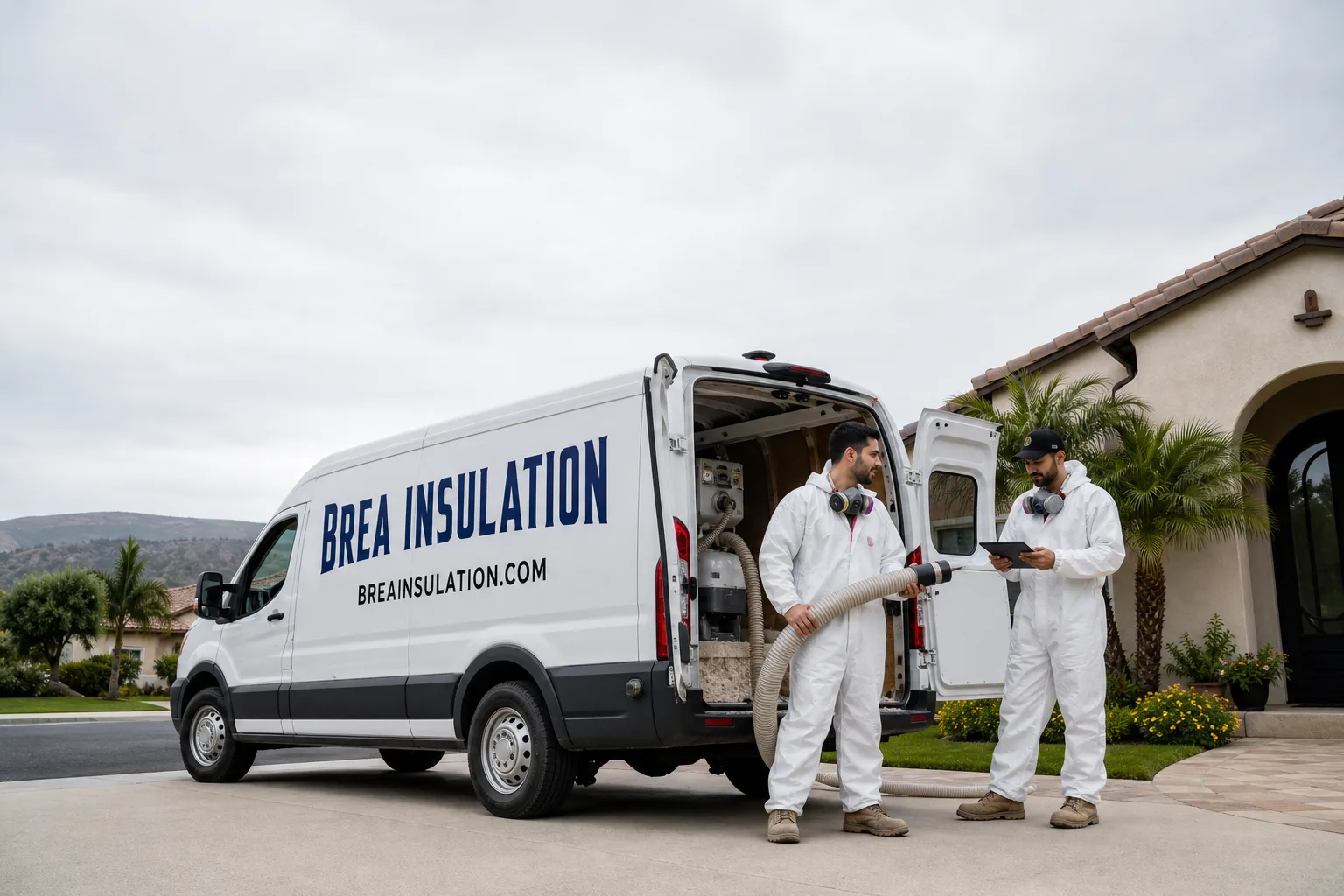
Fast, Reliable Attic Insulation Across South Gate
Most 1950s tract homes in South Gate were built with thin insulation, and after 70 years it has settled or failed. We typically reach homes in South Gate within one business day for an inspection, and most attic upgrades are done in a single visit. Brea Insulation brings single-trade focus to every job: insulation is all we do. Call Phil Darnell’s team at (866) 858-4033 for a free estimate on attic insulation in South Gate.
Why Brea Insulation Is South Gate’s Preferred Attic Insulation Company
South Gate’s post-war housing stock keeps our crews sharp. The homes are consistent in their construction, but each attic has its own quirks: settled cellulose, original wiring, odd joist spacing, or old access hatches. Homeowners here talk to each other. On a job near South Gate Park, we found a 1952 ranch with original cellulose insulation that had settled to less than 2 inches, leaving the attic effectively uninsulated. Our crew carefully inspected for asbestos (finding none), then blew in Owens Corning fiberglass to achieve R-49, navigating the 24-inch joist spacing and working around knob-and-tube wiring. The homeowner later shared attic photos with neighbors, prompting two nearby families to book estimates.
That is how work spreads in South Gate: proof, not promises. We carry eight manufacturer lines including Owens Corning, Johns Manville, and Rockwool, because the right material for a 1955 home on State Street is not automatically the right material for a 1980s addition near Tweedy Boulevard. Insulation is the only trade on our menu, which means the person assessing your attic and the crew installing the material are both specialists.
Attic Mold Removal in South Gate
Attic mold removal in South Gate usually starts with poor ventilation, not a roof leak. Single-story tract homes built from 1945 to 1960 often have soffit vents that were never adequate, so warm moist air pools in the attic and condensation feeds mold on the underside of the roof sheathing. Removing mold here means addressing the moisture source at the same time, otherwise it returns within a year. A typical mold remediation in a South Gate attic runs $1,800 to $4,200 depending on the affected square footage and whether the sheathing needs replacement.
Signs mold is already active in your attic
If you notice a musty smell that gets stronger in summer, dark staining on roof decking visible from the access hatch, or unexplained allergy symptoms that ease when you leave the house, have it checked. South Gate’s hot dry summers do not kill attic mold. They bake it, which releases spores into the living space below.
What we do before any insulation goes in
We will not blow new insulation over moldy sheathing. The process is straightforward: locate and fix the moisture source, treat the affected wood, replace any structurally compromised material, then verify the attic can breathe properly before insulation is installed. If ventilation needs improvement, we handle baffles and venting as part of the same job.
Attic Insulation Removal in South Gate
Attic insulation removal in South Gate is most commonly needed when the original material contains contaminants, has been soaked by pests or plumbing leaks, or is simply so degraded it no longer performs. Many 1950s attics here still have the original loose-fill product installed when the house was built. In some South Gate attics we test and find asbestos-containing vermiculite or legacy insulation; that requires removal by a licensed abatement contractor before we can proceed. Basic removal for a standard 1,000-square-foot South Gate attic typically runs $1,500 to $3,000, with contaminated-material abatement priced separately.
When removal beats adding more on top
If the existing insulation is wet, moldy, pest-infested, or contains asbestos, you cannot just cover it. Adding new material over compromised old material traps moisture and contaminates the new layer. Removal resets the attic to a clean substrate, which also gives our crew clear access to inspect wiring and seal air leaks.
What a clean attic makes possible
Once old material is out, we can properly air-seal the attic floor, address any knob-and-tube wiring that becomes exposed, and install the right R-value from scratch. A clean cavity also makes the Attic Insulation upgrade far more effective, because there are no hidden gaps or settled pockets undermining the new layer.
Trusted Brands We Service in South Gate
Brea Insulation installs materials from eight manufacturers, which matters in a market with older homes that often have specific constraints. We regularly use Demilec closed-cell spray foam where air sealing is critical, GreenFiber cellulose for South Gate homeowners who want recycled content, and Owens Corning or Johns Manville fiberglass for blown-in top-ups. The brand follows the job. We do not push one product because it’s convenient to stock. For South Gate’s 90280 service area, we keep the most commonly needed materials staged for fast turnaround, so a retrofit project does not stall waiting on supply.
Common Attic Insulation Problems We See in South Gate Homes
- Settled cellulose in original 1950s attics. The original loose-fill has compacted over 60-plus years, leaving the top plates of ceiling joists exposed. That creates thermal bridging and cuts the effective R-value to near zero, even if the attic looks like it has insulation.
- Knob-and-tube wiring buried in old insulation. Many South Gate homes still have active knob-and-tube circuits in the attic. Blown insulation over these wires can trap heat and create a fire risk. We route new material around the wiring or recommend rewiring before we install.
- Asbestos in legacy attic materials. Some South Gate attics contain vermiculite or other asbestos-bearing insulation installed in the 1950s. We test before we disturb anything. If asbestos is present, a licensed abatement contractor does the removal first.
- Radiant heat gain in summer. South Gate’s hot, dry summers put a heavy load on attics. Without adequate insulation and ventilation, attic temperatures exceed 140°F in July and August, which forces your AC to run far longer and shortens roof shingle life.
Pricing for Attic Insulation in South Gate, CA
A blown-in attic insulation top-up for a standard South Gate tract home (roughly 900 to 1,200 square feet of attic) runs $1,400 to $2,600 to reach R-38 to R-49. Full replacement, including removal of old material, typically lands between $3,000 and $5,500. Spray foam in a South Gate attic costs more upfront, usually $4,800 to $9,000 depending on the cavity depth and foam type, but it also air-seals the home and performs differently than blown-in fiberglass. Batting for exposed joists in smaller attics runs $1,100 to $2,200 installed. Every job starts with a free on-site inspection and a written quote before any work begins. Call (866) 858-4033 to schedule one.
We Also Serve Cities Near South Gate
Our crews regularly work in South Gate and the surrounding communities of Lynwood, Huntington Park, Walnut Park, and Bell. If you are in one of these areas and need attic insulation work, the same team and the same eight-brand material bench apply. Travel time is short, which keeps scheduling flexible.
Serving South Gate, CA — Our Local Coverage Area
We’re based in the South Gate area and know this community well. Use the map below to see our service coverage — if you’re nearby, we can almost certainly help.
FAQs About Attic Insulation in South Gate
Yes, in most cases adding more is the right move, provided the existing cellulose is dry, free of mold or pest contamination, and tests negative for asbestos. The old insulation has settled, but it still contributes some R-value. We add new material to reach the recommended depth rather than removing what is there, which saves you the cost of a full removal. If the old insulation tests positive for asbestos, it must be abated first. Call (866) 858-4033 and we will inspect before recommending anything.
R-38 to R-49 is the right target for a South Gate attic. Because our summers are the real energy drain, the goal is to block radiant heat from the roof deck, not to hold heat inside. For most 1950s tract homes we recommend R-49 in blown-in fiberglass or cellulose, which gives meaningful cooling-season savings and meets current energy code guidance for our climate zone.
We never bury active knob-and-tube wiring under blown insulation. The wire needs open air to dissipate heat. We either work the insulation around the circuits, leaving a clearance zone, or if the homeowner plans to rewire, we coordinate with a licensed electrician so insulation installation happens after the wiring is replaced. This is standard practice on older South Gate homes where knob-and-tube circuits remain common.
Yes. When two or more homes on the same South Gate block schedule attic insulation work within the same week, we apply a multi-home discount because the crew is already staged nearby and mobilization is minimal. This has become common in South Gate, where neighbors share photos and decide together. Call (866) 858-4033 and mention the second address when you schedule the estimate.
If the existing insulation is wet, moldy, heavily infested with rodent droppings, or contains asbestos, it needs removal rather than top-up. You will usually notice the signs before you open the attic: persistent musty odor, unusually high summer cooling bills despite a newer AC unit, or visible staining on ceilings below the attic. A quick inspection tells us which path makes sense, and the estimate is free.
Written by Phil Darnell, Owner at Brea Insulation, serving South Gate and surrounding communities.