
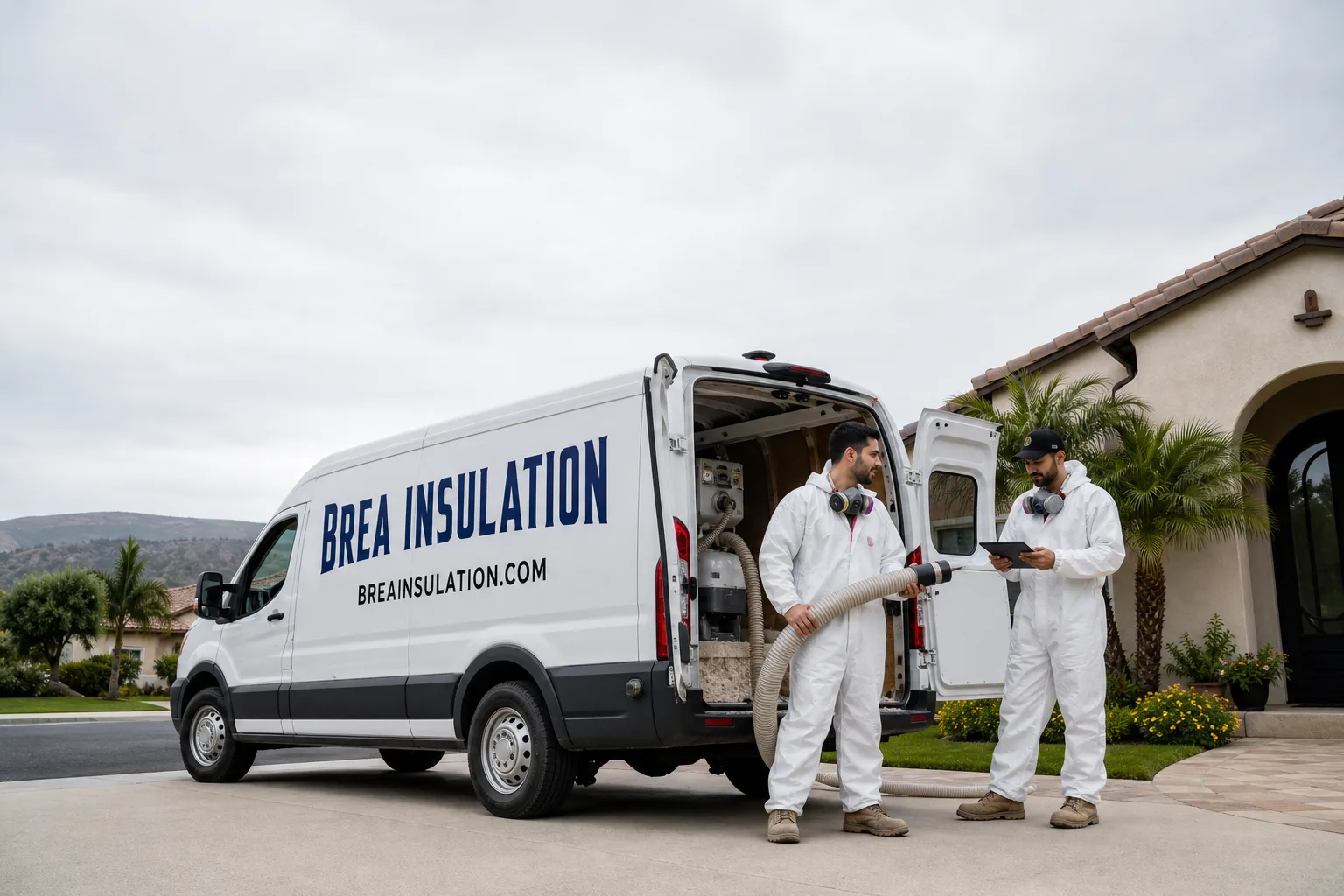
Fast, Reliable Attic Insulation Across San Joaquin Hills
Attic insulation in San Joaquin Hills runs $1,800 to $6,500 for a typical full attic job depending on method and square footage, with blown-in top-ups starting around $900 and full spray-foam air-sealing packages reaching $12,000 on larger custom homes. We get crews from our Brea shop to San Joaquin Hills (ZIP 92657) within one business day for estimates, and same-week installs are standard because we keep material stocked across all eight brands we carry. If your hillside home has rooms that swing hot in the afternoon and clammy in the morning, call (866) 858-4033 and we’ll pinpoint why.
San Joaquin Hills is different from the flatland neighborhoods below. Homes are built into canyon walls and ridgelines, which means the attic is rarely the only place heat and moisture move in and out. We know these streets, the slope-cut framing patterns, and where the fog pools at dawn. That local knowledge changes how we spec an insulation job here, and it’s why we don’t treat this area like Orange County sprawl.
Why Brea Insulation Is San Joaquin Hills’s Preferred Attic Insulation Company
Insulation is all we do. No roofing, no HVAC add-ons, no handyman side work. That single-trade focus matters in San Joaquin Hills, where hillside homes with cantilevered floors and ventilated crawlspaces demand a level of air-sealing knowledge that generalist contractors simply don’t carry. When we walk an attic here, we look at the rim joists, the baffle runs, the slope-side cavities, and the roof-to-wall transitions before we ever quote a number.
Phil Darnell built this company around matching the material to the home, not the other way around. That’s why we carry Owens Corning, Johns Manville, Icynene, Demilec, GreenFiber, and three more manufacturer lines. A 1990s Mediterranean custom near Newport Coast Drive needs a different approach than a 2005 tract home up near the 73 corridor, and having eight brands on the bench means we’re not forcing one product into every attic we touch.
Response time to San Joaquin Hills is tight because we service this ZIP regularly, not occasionally. Estimates are free, and we quote with line-item pricing so you see exactly what’s being installed and why. Homeowners here tend to research before they call. We respect that and we’ll walk you through the R-value math, the venting plan, and the moisture logic for your specific exposure before anything gets signed.
Attic Ventilation in San Joaquin Hills
Attic Ventilation in San Joaquin Hills is the unsung workhorse behind every successful insulation job, because these homes live in two climates at once: the fog-soaked ocean-facing slopes and the sun-baked canyon floors. Without balanced intake and exhaust airflow, insulation can trap moisture from the marine layer, and that’s when you get sheathing rot, mold on the rafters, and R-value degradation that no amount of added fiberglass will fix. A typical attic ventilation package in San Joaquin Hills runs $650 to $2,200 depending on attic size and whether we’re adding ridge vents, soffit vents, or powered exhaust units.
Slope-Side Airflow Correction
On the stepped lots above Laguna Canyon, we often find attics where the original builder vented one side of the roof plane and ignored the other. That creates dead-air pockets on the foggy side of the house. We correct that with balanced venting tied to the actual roofline, not a one-size chart.
Fog-Resistant Vent Design
Marine-layer fog carries a lot of moisture. Standard vent counts that work in Irvine don’t always move enough air here. We spec higher net-free-area venting on west-facing slopes and pair it with baffles that keep the airflow channel open when deep cellulose or spray foam is installed.
Radiant Barrier in San Joaquin Hills
Radiant Barrier in San Joaquin Hills matters more than in almost any nearby city because the ridgeline homes here take direct afternoon sun for hours while the canyon-side homes sit in fog until noon. That contrast on the same street is unusual. A radiant barrier installation in San Joaquin Hills typically runs $1,100 to $3,800 for a standard attic, and the payoff shows up in a 15 to 25 degree drop in attic temperature on hot inland-facing afternoons.
Wildfire-Zone Class A Details
San Joaquin Hills sits in high-fire-hazard territory, and that affects how we install radiant barriers. We keep the barrier off the eave edge vents to preserve airflow, and we use perforated foil products that won’t block moisture from escaping the attic. Class A material compatibility is part of the spec, not an upsell.
Ventilation-First Barrier Placement
Installing radiant barrier in a foggy coastal attic without first fixing ventilation can trap moisture and turn a hot-attic problem into a mold problem. We won’t do it. Every radiant barrier quote in San Joaquin Hills includes a ventilation assessment, and if the airflow math doesn’t work, we say so before selling anything.
Trusted Brands We Service in San Joaquin Hills
We stock materials from Owens Corning, Demilec, Icynene, GreenFiber, and the rest of our eight-brand roster specifically because San Joaquin Hills jobs rarely fit a one-product answer. Demilec spray foam handles the rim-joist air-sealing work that cantilevered floors here demand. GreenFiber blown-in cellulose gives us a recycled-content option for homeowners who care about that. Owens Corning fiberglass batts stay in stock for standard attic top-ups and repositioning work. Our Brea warehouse keeps full pallets of these materials, so a San Joaquin Hills project doesn’t wait on a distributor delivery from out of state. When we quote a start date, the material is already in Orange County.
Common Attic Insulation Problems We See in San Joaquin Hills Homes
- Cantilevered floor heat loss. The section of floor that overhangs a downhill slope is often insulated with a thin batt or nothing at all. Fog-cooled air moves under that floor at night, and the rooms above drop several degrees. Air-sealing the rim joists with spray foam fixes this, but most attic-only insulation companies never look down there.
- Fog-driven attic moisture. West-facing attics near the ocean get marine-layer fog that condenses on the underside of the roof deck every morning. If the attic is over-batt insulated without proper ventilation, that water soaks the insulation and drops its R-value by 30% or more. We see this repeatedly in the hollows below the ridgelines.
- Irregular slope-cut framing gaps. Custom homes on graded lots have framing angles that don’t match standard batt sizes. The installer stuffs a batt into an odd-shaped cavity, it gaps at the edges, and air leaks through. We cut and pack batts to the cavity, or we use spray foam to fill irregular spaces completely.
- Radiant barrier without ventilation. Some homes near the canyon floor have radiant barrier installed over an under-ventilated attic. The barrier traps moisture from the morning fog, and the attic becomes a sweatbox. We correct the ventilation first, then re-install the barrier properly.
Pricing for Attic Insulation in San Joaquin Hills, CA
A blown-in attic insulation top-up in San Joaquin Hills runs $900 to $2,400 for a standard 1,200 to 2,500-square-foot attic when the existing material is in decent shape. Full attic insulation replacement with fiberglass batts runs $1,800 to $4,200. Attic baffles and ventilation prep add $400 to $1,100. Spray foam rim-joist air-sealing for a cantilevered home runs $1,500 to $4,000 depending on linear footage. And a complete radiant barrier plus ventilation package lands between $2,000 and $5,500. Call (866) 858-4033 for a line-item estimate on your specific home. Every quote is free, and we don’t charge for the attic inspection.
We Also Serve Cities Near San Joaquin Hills
Our Attic Insulation crews cover San Joaquin Hills plus Aliso Viejo, Newport Beach, Laguna Beach, and Irvine from our Brea shop. If you own a property in one of those areas, we bring the same eight-brand material bench and the same hillside-focused air-sealing approach. Call (866) 858-4033 and we’ll tell you which crew is closest to your ZIP.
Serving San Joaquin Hills, CA — Our Local Coverage Area
We’re based in the San Joaquin Hills area and know this community well. Use the map below to see our service coverage — if you’re nearby, we can almost certainly help.
FAQs About Attic Insulation in San Joaquin Hills
Because the floor under your living room overhangs open air on the downhill side, and heat moves through the exposed rim joists and slope-side cavities regardless of how much insulation sits in the attic above. Without air-sealing those underfloor perimeter spaces, the best attic insulation in the world won’t stop the rooms above from running cold on foggy mornings. We treat the two as one system: attic insulation plus rim-joist spray-foam air-sealing. Call (866) 858-4033 if you want us to check whether your cantilevered floor is leaking heat.
The marine layer delivers several hours of high-humidity fog nearly every morning on the ocean-facing slopes, and that moisture condenses on the attic sheathing if airflow is weak. Wet fiberglass loses significant R-value, and repeated moisture cycles lead to mold. The fix is more ventilation, not more insulation. We assess airflow on every San Joaquin Hills attic job before we add material.
A perforated double-sided foil radiant barrier works best here because the perforations let moisture escape while the foil blocks the radiant heat that hits ridgeline attics on inland-facing afternoons. We install it against the rafters with an air gap, and we only do it after ventilation is balanced. For homes near the canyon floor where sun exposure is lower, we sometimes recommend skipping the barrier entirely and investing in air-sealing instead. We’ll show you the math for your specific street.
Yes. San Joaquin Hills sits in a high-fire-hazard area, so attic insulation and ventilation choices have to work with ember-resistant construction details. We use Class A compatible materials, keep eave vents clear so the roof edge stays ember-defensible, and we never install a product that reduces the home’s fire-hardening posture. If your home was built before current wildfire codes, we can bring your attic details up to current expectations.
Yes. Most Mediterranean-style homes in San Joaquin Hills have concrete or clay tile roofs with flat profiles and deep attics underneath, and nearly all our attic insulation work happens from inside the attic. We don’t lift tiles or alter the roofing. If ventilation work requires adding a ridge vent, we coordinate with a tile-roof specialist so the work matches the existing roofline and no tiles are cracked in the process.
Written by Phil Darnell, Owner at Brea Insulation, serving San Joaquin Hills since 2010.