
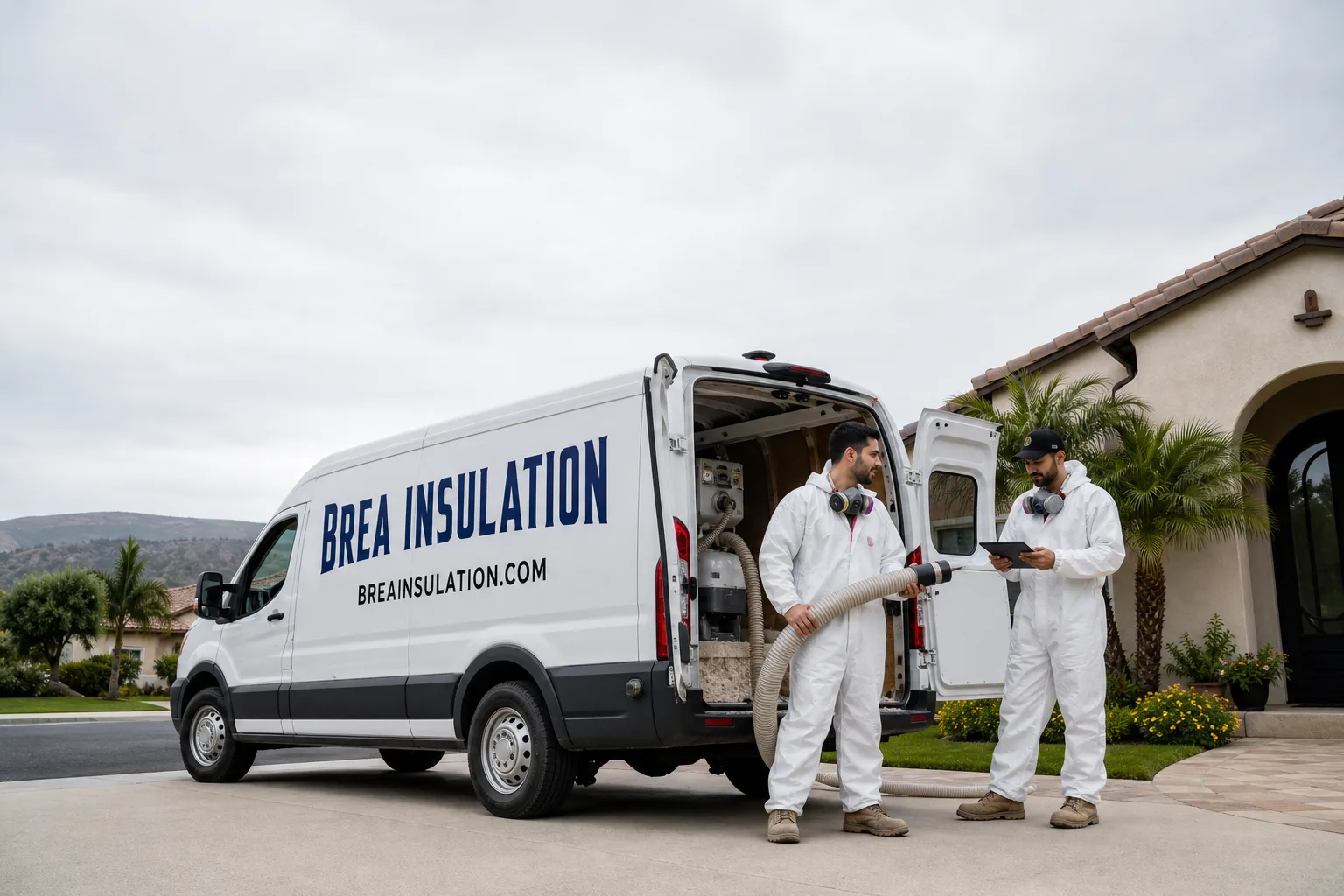
Fast, Reliable Attic Insulation Across Running Springs
Most homes in Running Springs are losing heat through their attics right now, and the snow on the roof is telling the story: patchy melt means warm air is escaping, which leads to ice dams and water stains on your ceiling. Brea Insulation fixes that. We’re a dedicated insulation contractor, not a handyman service with insulation on the side, and we know what mountain-grade cold-climate insulation demands at 6,000 feet. Call Phil Darnell’s team at (866) 858-4033 for a free estimate anywhere in the 92382 zip code.
Why Brea Insulation Is Running Springs’s Preferred Attic Insulation Company
Running Springs isn’t a typical Southern California insulation job. It’s a cold-climate problem disguised as a SoCal address. Most insulation contractors in the Inland Empire are built around heat rejection – keeping hot air out. Up here, the job flips. You’re keeping heat in, blocking freeze-thaw cycling, and preventing snowmelt from refreezing at your eaves. That’s a different skillset, and it’s one we take seriously.
Phil Darnell runs Brea Insulation with a single-trade focus: insulation is all we do. No roofing side jobs, no HVAC installs, no drywall work. That narrow focus means our crew has seen every mountain cabin failure mode Running Springs can throw at us, from compressed fiberglass batts in 1960s A-frames to open-beam ceilings with no cavity space for standard insulation. We come to Running Springs ready for the actual job, not a generic attic top-up.
We stock materials from Owens Corning, Icynene, Demilec, and GreenFiber, so we’re not limited to whatever’s cheapest at the supply house. The right insulation for your home – not just what’s easiest to install. That matters when the temperature drops below freezing for weeks at a time and your attic is the only thing between you and a four-figure heating bill.
Attic Insulation Removal in Running Springs
Attic Insulation Removal in Running Springs is often the first step before any upgrade, because what’s sitting in these older cabins is rarely worth keeping. Here’s what we encounter: fiberglass batts compressed to half their original R-value from decades of snow load and improper storage, blown-in cellulose that’s settled into a thin mat, and insulation contaminated by rodent activity or roof leaks. Pulling it out isn’t optional when it’s failed – it’s the only way to start clean.
When does a Running Springs homeowner need removal rather than a simple top-up? Any time there’s moisture damage, mold, or ice dam staining on the ceiling sheathing. You can’t just blow new insulation over wet, moldy material and call it done. The moisture problem continues underneath, and you’ve wasted the new install. Removal also matters when we’re air-sealing vaulted ceilings; the old material has to come out before we can get to the framing.
What Removal Involves Up Here
In mountain cabins, removal often means working around tight access points, steep rafter bays, and occasional snow blocking the attic hatch in winter. We use commercial vacuums rated for fiberglass and cellulose, and we bag everything for proper disposal. The goal is a clean ceiling plane ready for air sealing.
Removal Cost Expectations
For most Running Springs attics – say 800 to 1,500 square feet – removal runs $1.50 to $3.50 per square foot depending on depth, contamination, and access difficulty. A full removal and disposal on a typical 1,200-square-foot attic lands between $1,800 and $4,200. If the material is wet or heavily soiled, expect the higher end.
Insulation Contractors in Running Springs
Insulation Contractors in Running Springs come in two flavors: generalists who add insulation to their service menu, and specialists who’ve spent years solving mountain-specific thermal problems. We’re the second kind. When you hire Brea Insulation, you get a contractor who knows that R-30 in a Running Springs attic is the floor, not the target – and who knows how to get there when your ceiling is open beams and tongue-and-groove decking.
A Running Springs homeowner calls us when the upstairs bedroom is 10 degrees colder than the living room, when ice dams form every January, or when they’ve had enough of $600 winter gas bills. The job involves more than blowing in some fiberglass. It’s diagnosing where air is leaking, checking the existing R-value, evaluating rafter depth, and choosing a method that fits the building’s construction.
Why Building Age Changes Everything
Most Running Springs cabins were built between 1950 and 1985, long before Title 24 energy standards existed. That means 2×6 rafter bays, no house wrap, single-pane windows, and attic hatches that leak like an open window. Modern insulation can’t perform if the air barrier above it fails. So we treat every older cabin as an air-sealing job first, insulation job second.
When Mountain Conditions Limit Access
Snow season is real up here. When there’s three feet of snow on the roof, attic access through the hatch is still possible – we work from inside most of the time – but roof-level work like baffle installation or exterior sealing has to wait for a thaw window. We schedule Running Springs jobs around weather, not against it, and we’re honest about what can and can’t be done in a given week. Call (866) 858-4033 before heavy snow locks in and we’ll get your insulation in while conditions allow.
Trusted Brands We Service in Running Springs
We service and install materials from Owens Corning, Icynene, GreenFiber, and Demilec, which gives us the flexibility to match insulation to the specific demands of Running Springs construction. Open-cell Icynene spray foam is often the right answer for vaulted open-beam ceilings where batts won’t fit and the homeowner wants to keep the beam look. GreenFiber blown-in cellulose works well for flat attic floors that need a deep, dense top-up. Owens Corning fiberglass handles standard rafter bays where budget matters and access is straightforward. We carry what the job needs, not whatever one manufacturer pushes.
Common Attic Insulation Problems We See in Running Springs Homes
- Ice dams at the eaves. Warm attic air melts snow on the roof deck, water runs down to the cold eaves, refreezes, and backs up under the shingles. The fix is air sealing plus adequate insulation, not caulking the roof.
- Compressed fiberglass in vaulted ceilings. Mid-century cabins near Highway 18 and the post office area have open-beam ceilings with batts stuffed into shallow cavities. Once compressed, R-19 might be performing at R-7 or worse.
- Leaky attic hatches and knee walls. We find uninsulated access panels everywhere in Running Springs. A single unsealed hatch can lose as much heat as a 2-foot by 3-foot hole in the ceiling.
- Settled cellulose from the 1990s. Some cabins got a blown-in cellulose treatment decades ago. It’s now settled to a few inches, R-value is gone, and it’s often blocking soffit vents. Top-ups help, but only after we check the air barrier.
Pricing for Attic Insulation in Running Springs, CA
We Also Serve Cities Near Running Springs
Brea Insulation runs crews up the 330 and 18 into Lake Arrowhead, Crestline, and the surrounding mountain communities, and we also serve Highland and Mentone down on the floor. Whether you’re in Running Springs or just down the grade, the same mountain-grade insulation standards apply. For the full scope of what we do, see our Attic Insulation page.
Serving Running Springs, CA — Our Local Coverage Area
We’re based in the Running Springs area and know this community well. Use the map below to see our service coverage — if you’re nearby, we can almost certainly help.
FAQs About Attic Insulation in Running Springs
Deep snow sits on the roof for weeks, so attic insulation has to do two jobs: keep interior heat from escaping into the attic (which melts snow from below) and hold enough R-value at the ceiling plane that the entire roof deck stays uniformly cold. That means heavier insulation and real air sealing, not a thin layer of blown-in fiberglass. We recommend R-49 or higher for flat attics and R-30 minimum in vaulted rafter bays where space allows. Call (866) 858-4033 for an evaluation specific to your roof’s snow load.
Yes, and it’s one of the most common jobs we do in Running Springs. The approach depends on rafter depth. If rafters are deep enough, we fit rigid polyiso board between them with an air gap maintained at the sheathing, then leave the beams exposed. If the cavity is too shallow, spray foam gives us the most R-value per inch without changing the ceiling appearance. The beams stay visible. The ice dams stop. It’s not an either-or.
At 5,800 to 6,000 feet with sustained freezing temperatures, we recommend R-49 to R-60 for flat attics and floors, and no less than R-30 for vaulted ceilings where rafter depth limits space. Lowland Inland Empire advice often stops at R-38; that’s under-insulated for this elevation. The exact target depends on your ceiling type and whether we can install baffles to preserve soffit ventilation. Call (866) 858-4033 for a free assessment and we’ll tell you what your specific attic needs.
Most of our Running Springs insulation work happens from inside, through the attic hatch, so roof snow doesn’t stop the core install. What snow does restrict is exterior work: baffle installation at the eave line, roof-deck sealing, and any vent work requires access from outside, and that waits for a thaw window. If you’re dealing with ice dams now, we can still air-seal and insulate the ceiling plane from inside this winter and handle the exterior details when it warms up.
Depends on condition. If the old batts or blown-in material is dry, not compressed, and free of rodent contamination, topping up is cost-effective and often all you need. But if there’s moisture staining, mold, or evidence of past ice dams, removal is worth it. You don’t want new insulation installed over a moisture problem that keeps doing damage underneath. Our removal work in Running Springs typically runs $1.50 to $3.50 per square foot; the inspection to determine which path you need is free when you call (866) 858-4033.
Written by Phil Darnell, Owner at Brea Insulation, serving Running Springs and the San Bernardino Mountains with mountain-grade attic insulation since the day the company opened its doors.