Fast, Reliable Attic Insulation Across Ontario
Attic insulation in Ontario, CA typically costs $1.50 to $4.50 per square foot installed, with most full attic jobs running $1,800 to $4,200 depending on method and material. We’re Brea Insulation, led by Phil Darnell, and we run dedicated crews into Ontario every week, so you’re not waiting on a contractor who treats the Inland Empire as an afterthought. Call (866) 858-4033 for a free estimate. Same-week scheduling is standard across 91758, 91761, 91762, and 91764.
Why Brea Insulation Is Ontario’s Preferred Attic Insulation Company
We work in Ontario constantly, and that changes how we bid the job. Phil Darnell knows the difference between a 1964 tract home off Euclid Avenue with original rock wool and a 2018 build in the newer subdivisions near Archibald and Riverside Drive. That local knowledge means our material recommendations actually fit the house in front of us, not some generic template.
Insulation is all we do. No roofing, no HVAC add-ons, no handyman overflow. That single-trade focus is why Ontario property managers and homeowners keep calling us back when attics in ZIP 91762 start cooking in August or when freeway-adjacent homes along the 60 corridor show insulation gaps. We carry eight manufacturer lines: Owens Corning, Johns Manville, Knauf, Rockwool, CertainTeed, Icynene, Demilec, and GreenFiber. The recommendation is driven by the home’s needs, not by what’s cheapest to stock.
Response time to Ontario from our Brea yard is typically under an hour for assessments. For emergency insulation work after a leak or animal intrusion, we can usually get a crew out same-day or next-morning.
Radiant Barrier in Ontario
Radiant Barrier in Ontario is one of the highest-ROI attic upgrades we install, because Inland Empire summers push attic temperatures past 150°F in low-ventilation older roofs. A radiant barrier is a reflective foil layer installed under the roof deck that bounces radiant heat back out before it can soak into your insulation, similar to how Reflectix repair in Ontario works to block thermal transfer. In Ontario’s semi-arid climate with regular 100°F-plus summer days, this single addition can cut attic temperatures by 20 to 30 degrees.
When Ontario Homes Benefit Most
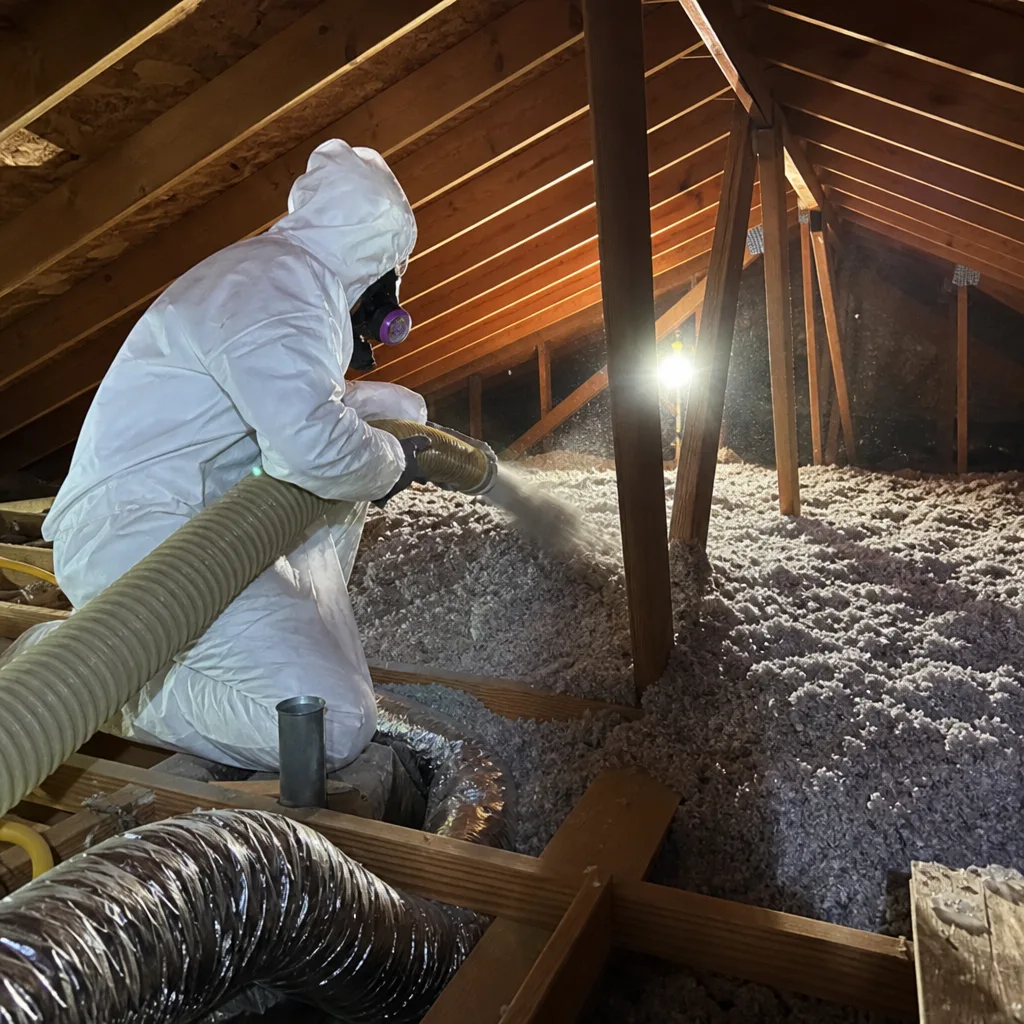
Homes built in the 1950s through 1970s, especially in ZIP 91762, often have roof pitch and eave geometry that don’t support enough passive ventilation. Adding a radiant barrier compensates for that design limitation without a full re-roof. It’s also effective when paired with blown-in fiberglass or cellulose on top of existing batts.
Radiant barrier installation in Ontario typically runs $1.50 to $2.75 per square foot of attic floor area. A 1,200-square-foot attic usually lands between $1,800 and $3,300 depending on access and roof complexity.
What We Actually Do During a Radiant Barrier Install
We staple or secure the foil to the underside of the roof rafters, leaving a small air gap that’s critical for the reflective surface to work. Then we inspect existing insulation for compression, moisture damage, or gaps caused by Santa Ana wind-driven dust infiltration. If you’re also topping up insulation, we coordinate both so you’re not paying for two mobilizations.
Attic Cleaning Services in Ontario
Attic Cleaning Services in Ontario matter more here than in coastal cities because of the dust. Santa Ana winds push fine particulate through soffit vents and gable ends, and decades of that dust settles into insulation, reducing its effective R-value. Rodent activity is the other driver; older tract homes in 91761 and 91762 have enough roof and eave gaps that rats and squirrels get in more often than homeowners expect.
Old Insulation Removal
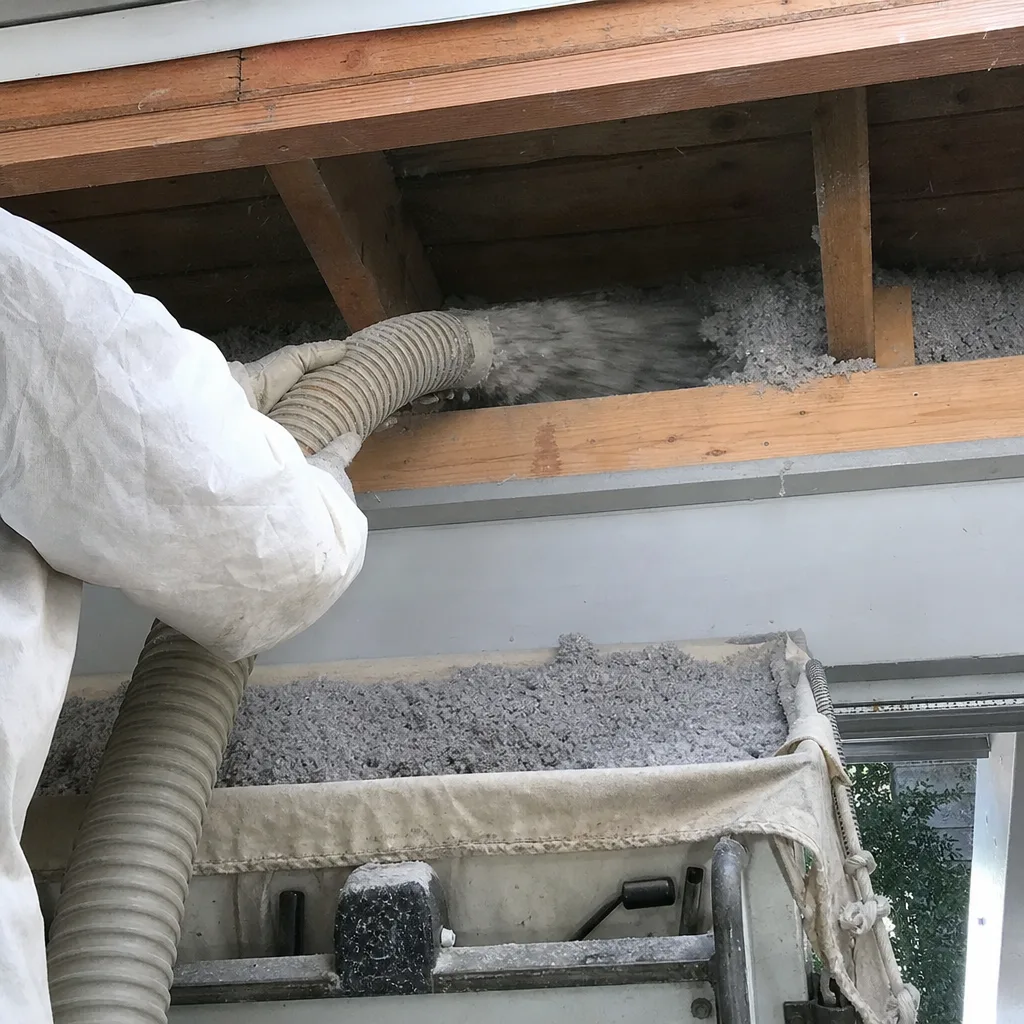
We use HEPA-filtered vacuums to remove old, contaminated fiberglass or cellulose before reinsulating. In Ontario homes where the original insulation has compressed or absorbed moisture from condensation in under-vented attics, removal is the right move; you can’t stack new material on top of degraded old material and expect the R-value math to work. Full removal and disposal for a typical 1,200-square-foot attic runs $900 to $1,800.
Sanitizing and Air-Sealing Prep
After removal, we treat for odor and bacteria from animal waste, then inspect the top plates, plumbing penetrations, and chase ways for air leaks. This is the step most Ontario homes skip, and it’s why some attics feel hot even after new insulation goes in. Your insulation can’t do its job if hot air is bypassing it entirely.
Attic cleaning alone in Ontario typically costs $1.50 to $3.00 per square foot. Bundled with new insulation, you’ll save 15 to 25 percent compared to scheduling them separately.
What happens when you call
- 1
A real person answersNo phone trees — you reach a local pro.
- 2
You get an upfront price rangeHonest numbers before anyone is dispatched.
- 3
A background-checked tech heads outLicensed & insured, dispatched right away.
- 4
You approve before work beginsNothing starts until you say go.
Trusted Brands We Service in Ontario
We install and service materials from Icynene, Demilec, Owens Corning, and GreenFiber across Ontario, and we keep common stock on hand for same-week installs. Icynene’s open-cell spray foam is the go-to for air-sealing older Ontario attics where top-plate leaks are the main problem. Demilec closed-cell handles the moisture and structural rigidity needs we see in kitchen and bath ceiling areas. Owens Corning fiberglass and GreenFiber cellulose are our workhorse blown-in options; both hit modern R-value targets without a full gut. The right insulation for your home, not just what’s easiest to install.
Common Attic Insulation Problems We See in Ontario Homes
- Compressed and heat-damaged batts in low-ventilation 1950s-1970s attics. In ZIP 91762 especially, summer attic temperatures routinely exceed 150°F, and older fiberglass batts darken, compress, and lose up to 40 percent of their rated R-value over time. We see this pattern constantly during Attic Insulation assessments of original-insulation homes.
- Insulation displaced by 60 Freeway vibration. Homes along the corridor experience constant low-level vibration that shifts batts and blows out loose-fill, creating thin spots and gaps. Dust from the same corridor migrates through those gaps, further degrading performance.
- Air leakage at top plates and penetrations. The gap where interior walls meet the attic is almost never sealed in original Ontario tract construction. Santa Ana winds push heat and dust through those seams, bypassing whatever insulation is up there.
- Moisture damage from condensation in under-vented attics. Cool winter nights followed by warm days create condensation on the underside of the roof deck in houses with insufficient venting. That moisture drips onto insulation, matting it down and creating mold conditions.
Pricing for Attic Insulation in Ontario, CA
Blown-in fiberglass or cellulose in Ontario runs $1.50 to $2.75 per square foot installed. Attic batt insulation for new construction or accessible attics is $2.00 to $3.50 per square foot. Attic insulation top-up over existing material runs $1.20 to $2.00 per square foot, and full attic insulation replacement after removal runs $3.00 to $4.50 per square foot. Spray foam runs higher: open-cell Icynene typically lands $2.50 to $4.50 per board foot, and closed-cell Demilec $3.50 to $6.00 per board foot. What moves the number in Ontario is attic access, existing ventilation condition, and whether rodent remediation is needed first. Estimates are free, and the quote Phil Darnell gives you is the price you pay. Call (866) 858-4033 for an exact number.
We Also Serve Cities Near Ontario
Our crews cover Ontario and the surrounding Inland Empire communities: Montclair, Upland, Chino, and San Antonio Heights. If you’re in one of those neighboring cities, we schedule the same week and bring the same eight-brand material bench. No waiting on a crew that only comes through monthly.
Serving Ontario, CA — Our Local Coverage Area
We’re based in the Ontario area and know this community well. Use the map below to see our service coverage — if you’re nearby, we can almost certainly help.
FAQs About Attic Insulation in Ontario
Undersized attic ventilation is the main reason. Homes built in ZIP 91762 during the 1950s through 1970s often have eave and ridge venting designed for a milder climate, not for Inland Empire summers where attic temperatures exceed 150°F. That heat breaks down fiberglass binders, compresses batts, and accelerates moisture damage from condensation cycles. A newer 91764 home built to current Title 24 standards has far more venting and a tighter thermal envelope. If your older Ontario attic is under-vented, radiant barrier plus air sealing is usually the fix before reinsulating. Call (866) 858-4033 and we’ll assess it honestly.
Yes, and we’ve seen it. The 60 Freeway runs through Ontario and carries heavy truck traffic 24 hours a day, creating constant ground vibration. In homes within a few blocks of the corridor, that vibration slowly shifts blown-in insulation away from the eaves and compresses batts out of position. The result is thin coverage exactly where you need it most: at the perimeter where hot air enters. We recently reinsulated an attic in a 1962 tract home near the 60 in ZIP 91762 where the original fiberglass had compressed and darkened from years of heat and vibration. After air-sealing the top plates and adding a radiant barrier, we blew in Owens Corning fiberglass to bring the attic to modern R-value, which noticeably reduced the homeowner’s summer cooling costs. If you’re freeway-adjacent, a free inspection is worth the call.
A radiant barrier plus air sealing. A radiant barrier reflects roughly 85 to 95 percent of radiant heat before it reaches your insulation; air sealing stops hot, dusty air from bypassing the insulation entirely through top-plate gaps. In older Ontario attics with limited venting, those two measures together typically reduce attic temperatures 20 to 30 degrees. Blowing in additional insulation alone won’t fix a low-ventilation heat problem. We carry Icynene, Demilec, Owens Corning, and GreenFiber so the material matches the job.
Look at the age and condition. If your insulation is original to a 1950s-1970s build in 91761 or 91762, it’s almost certainly under-insulated by modern standards, likely R-19 or less when current code for attics is R-38 to R-49. If the material is compressed, darkened, or matted down from moisture, repair won’t restore performance. If you’re also seeing temperature swings between rooms or high summer bills despite a newer AC unit, your attic is the likely culprit. Upgrade is usually the right call when the material is over 25 years old or shows visible damage.
Sometimes, but for different reasons. Newer 91764 homes meet current code minimums, but code minimum is not the same as optimized. Gaps around recessed lights, bathroom fan housings, and attic access hatches are common even in new construction, and those leaks add up. We also see new builds where blown-in coverage settled unevenly in the first year, leaving thin spots. A targeted top-up or air-sealing appointment often pays for itself in the first summer. Attic Insulation work in newer homes is faster and cheaper because you’re enhancing, not starting over. Call (866) 858-4033 for a free estimate.
Written by Phil Darnell, Owner at Brea Insulation, serving Ontario and the Inland Empire with dedicated attic insulation, spray foam, and blown-in expertise.