Rockwool Attic Insulation in Brea: A Homeowner’s Guide
Rockwool attic insulation in Brea costs roughly $1.90 to $2.80 per square foot installed for a typical R-38 attic job, landing between fiberglass and spray foam on price. The real reason it earns its keep in Brea attics isn’t the sound deadening or the fire rating you’ll hear about in most marketing material. It’s dimensional stability: Rockwool holds its thickness and R-value when your attic swings from 50°F in January to 150°F in August, year after year. Fiberglass batts lose roughly 20% of their effective R-value when attic temperatures exceed 120°F due to radiative heat transfer, a threshold Brea attics exceed routinely from June through September. Rockwool’s mineral fiber matrix behaves differently at high temperatures, and that difference is measurable. If you’d rather skip the research and get a straight answer on what your attic actually needs, call (866) 858-4033 for a free estimate.
What Rockwool Actually Is (And Why It’s Not Fiberglass)
Rockwool is stone wool, sometimes called mineral wool. The manufacturing process melts basalt rock and recycled slag at roughly 2,900°F, then spins the molten material into fibers. The result is a dense, rigid batt that feels nothing like the fluffy pink stuff most people picture when they hear the word insulation. That density matters more than most homeowners realize.
Fiberglass batts are air-trapping systems. The glass fibers create pockets of still air, and still air is what does the insulating. But air moves. When a fiberglass batt gets hot on one side, radiant energy pushes through those air pockets, and the batt’s effective performance drops. Rockwool’s fiber matrix is far denser, roughly three times heavier per square foot than comparable fiberglass. The fibers themselves inhibit radiant transfer differently, and the material doesn’t rely solely on trapped air to do its job. In a Brea attic that hits 140°F by mid-afternoon in July, that’s the difference between an R-38 that performs like R-38 and an R-38 that’s quietly behaving like an R-30.
We carry Rockwool alongside Owens Corning and Johns Manville fiberglass because some attics genuinely need one over the other. The brand bench exists so the material gets matched to the house, not the other way around.
Fire Resistance and Wildland-Adjacent Realities in Brea
Brea sits close enough to wildland areas that fire resistance isn’t an abstract concern. Rockwool is non-combustible, carrying a Class A rating and withstanding temperatures above 2,000°F without melting or contributing fuel. Fiberglass melts around 1,200°F. Cellulose insulation is treated with fire retardants, but it’s still recycled paper at its core.
What does a Class A non-combustible classification actually mean for a Brea homeowner? Two things. First, Rockwool won’t ignite or spread flame if an electrical fault, recessed light, or ember intrusion introduces heat into the attic. Second, in the event of a house fire, stone wool insulation does not contribute smoke or toxic off-gassing the way some foam products can when they burn. None of this makes a home fireproof. But it does buy time, and in a fire, time is the only thing that matters.
For homes in the hills above Carbon Canyon or off Lambert Road near the 57, where ember cast from wildland fires is a legitimate concern, this is a practical consideration rather than a scare tactic. We’ve quoted enough attics in those neighborhoods to know that homeowners there think about fire in July the way other people think about their water heater.
Rockwool vs. Blown Cellulose vs. Spray Foam in a Brea Retrofitted Attic
Every retrofit attic in Brea presents the same three constraints: access, existing material, and joist configuration. Here’s where each material wins and loses in that environment.
- Rockwool batts win when the attic has open, regularly spaced joists and the homeowner wants something that won’t settle, won’t compress, and won’t need topping up in ten years. Lose when joist spacing is irregular, the attic has extensive cross-bracing, or access is so tight you can’t maneuver a 47-inch batt through the hatch.
- Blown-in cellulose wins for speed and coverage in attics with odd geometry, low clearance, or lots of obstructions. GreenFiber cellulose fills around pipes, wires, and framing better than any batt can. Lose if the attic gets foot traffic, because cellulose compresses when walked on and loses R-value.
- Spray foam wins on air sealing, full stop. Closed-cell foam from Icynene or Demilec is the only option that addresses both conduction and air infiltration in a single install. Lose on price and on future access, since foam makes any future electrical or framing work significantly more difficult.
For most Brea homes built between the 1970s and 1990s, the honest answer is that a Rockwool retrofit works beautifully when the attic framing is predictable. When it isn’t, blown-in insulation in Brea is the smarter play. Some attics benefit from both: Rockwool batts in the open field, blown-in product in the odd corners.
The Honest Cost Comparison: Rockwool vs. Fiberglass vs. Spray Foam
Rockwool costs more than fiberglass. There’s no way around that, and any contractor who tells you otherwise is about to surprise you with a change order. The meaningful question is whether the premium buys you anything you can measure over the life of the home.
| Material | Typical Installed Cost per Sq Ft (Brea, R-38 attic) | Real-World R-Value at 140°F Attic Temp | Notable Behavior Over Time |
|---|---|---|---|
| Fiberglass batt | $0.90 – $1.50 | Drops roughly 15 – 20% at high temps | Settles slightly; loses effectiveness if compressed or damp |
| Rockwool batt | $1.90 – $2.80 | Holds rated R-value with minimal degradation at high temps | Dimensionally stable; does not settle or compress |
| Blown cellulose | $1.50 – $2.20 | Stable at high temps but settles over years | Settles 10-20% without proper density; may need top-up |
| Closed-cell spray foam | $4.00 – $7.50 | Excellent across all temps; also air seals | Holds properties indefinitely but complicates future work |
What that table doesn’t show is the payback framing that matters for a Brea homeowner planning to stay in the house for ten or twenty years. Rockwool’s premium over fiberglass is roughly 60 to 80 percent on day one. But fiberglass that loses 20 percent of its effective performance in summer heat is essentially a lower R-value product for four months of the year, every year, for as long as it’s in the attic. The Rockwool you install in 2026 performs like Rockwool in 2046. That’s the argument for paying more once instead of paying slightly less and getting less performance from the moment the first heat wave hits.
We’d also note that R-38 is the baseline number most Brea attics should carry, with R-49 worth discussing if you have a two-story home, a dark roof, or a west-facing attic wall that catches afternoon sun. Call (866) 858-4033 and we’ll tell you what you’ve got up there now and what it would cost to fix it properly.
Which Brea Attic Configurations Favor Rockwool (And Which Don’t)
Attic access matters more than most homeowners expect. A standard 22-by-30 or 22-by-36 attic hatch in a Brea ranch home makes getting 47-inch Rockwool batts into the attic a two-person job, but it’s routine. What’s less routine is the attic where the HVAC air handler was installed in 1998, the ducts were run in 2011, and someone added a whole-house fan in 2015. Obstructions don’t just slow a batt install; they create gaps, and gaps in insulation are heat highways.
Here’s how we break it down when we walk a Brea attic:
- Good Rockwool candidates: attics with 16- or 24-inch on-center joists, full-height access, minimal mechanical obstruction, and homeowners planning to stay long-term or wanting better noise isolation from the upper floor.
- Better served by blown-in: attics with irregular joist spacing, shallow clearance near eaves, extensive cross-bracing, ductwork everywhere, or existing fiberglass that’s still in decent shape and just needs a density top-up rather than removal.
- Better served by spray foam: unvented cathedral ceilings, rooms over garages, bonus rooms with angled ceilings, or any space where air sealing is the primary problem rather than conductive heat gain.
The frustrating part about insulation is that the wrong product installed perfectly performs worse than the right product installed adequately. We’ve pulled fiberglass out of attics in the Country Hills area that was installed correctly but simply wasn’t the right material for the thermal conditions that attic experiences. The material has to match the house. That’s why attic insulation in Brea starts with measurements and a walkthrough, not a quote over the phone.
Sound Control, Moisture Behavior, and the Secondary Benefits
The sound attenuation is real. Rockwool’s density makes it roughly 30 percent better at blocking airborne noise than standard fiberglass. For a Brea homeowner under a flight path near Fullerton Airport or someone who hears every single car that climbs up Carbon Canyon Road, that matters. It’s not the reason we recommend Rockwool to most people, but it’s a secondary benefit that’s hard to ignore once you live with it.
Moisture behavior is the other underappreciated factor. Rockwool is hydrophobic, meaning it repels water. If a roof leak develops or condensation forms, the insulation doesn’t absorb the moisture the way fiberglass can. That means no soggy batt, no mold substrate, no R-value collapse from damp material. We once pulled a Rockwool batt out of a garage over in Olinda Ranch that had been getting dripped on for months. It was wet only where the water touched it, and it snapped back to shape once it dried. Fiberglass in the same situation would have been matted, compacted, and headed for the trash.
None of this is to say Rockwool is the right choice for every Brea insulation project. It isn’t. But when the conditions line up, it’s often the most durable material in the quote, and durability is the metric that matters most over a twenty-year ownership horizon.
When to Call a Pro (And What a Proper Rockwool Install Involves)
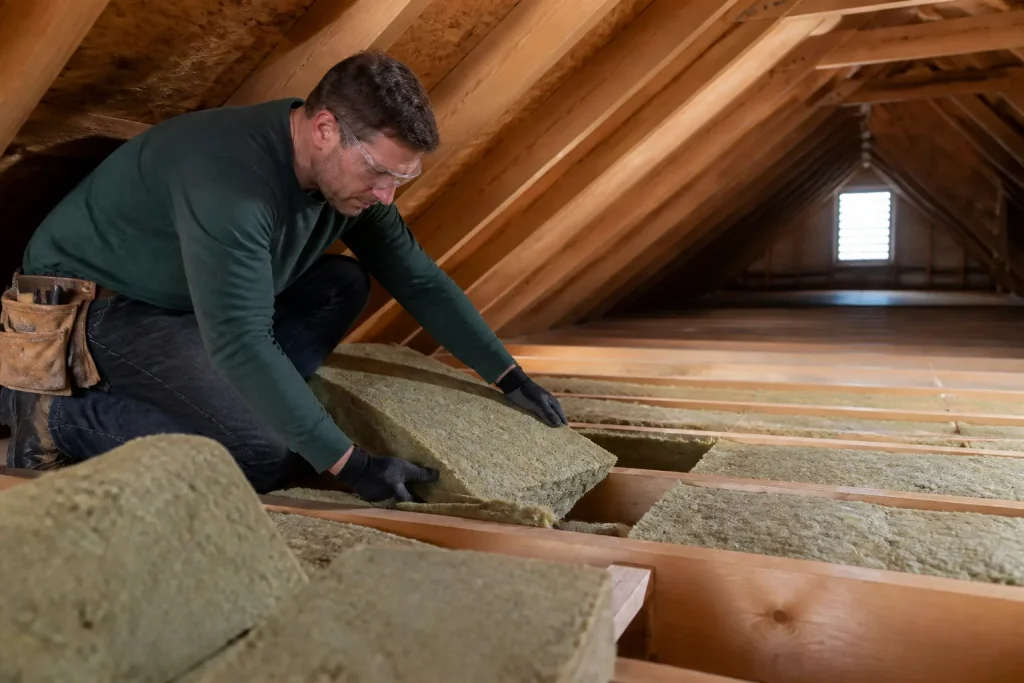
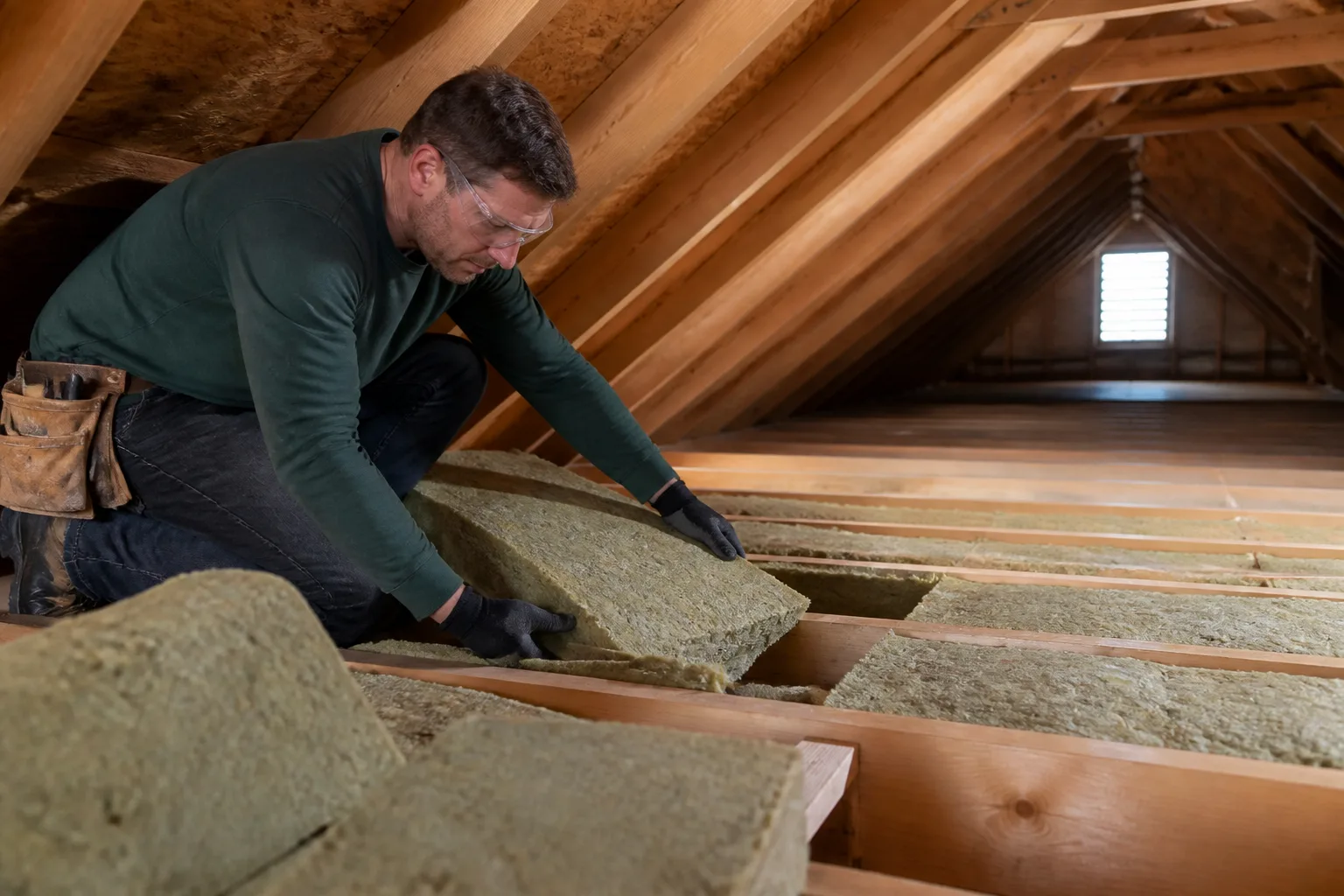
Installing Rockwool batts is physically approachable for a capable DIYer, but the quality ceiling is real. A proper install involves cutting batts to fit tightly around electrical boxes, plumbing vents, and framing, with no gaps, no compression, and no voids. In a Brea attic with 140°F surface temperatures in summer, the difference between a tight batt and a loose one is a measurable loss of thermal performance. If you’re comfortable working in heat, wearing long sleeves and a respirator, and spending a full day in the attic, you can get 90 percent of the result. The last 10 percent is where professional installation earns its cost: air sealing around penetrations, baffles at the eaves, proper depth verification, and the kind of coverage that doesn’t leave thermal gaps you can’t see from a ladder.
If the idea of working in a hot attic for a full day sounds less appealing than writing a check, that’s what we’re here for. Brea Insulation does one thing: insulation. Not roofing, not HVAC, not gutters. We carry eight brands so the recommendation fits the house, including Rockwool, Knauf, and Johns Manville for batt applications, Icynene and Demilec for spray foam, and GreenFiber for blown-in cellulose. Related services in Brea: spray foam insulation for air-sealing attics and blown-in insulation for retrofit top-ups in attics with challenging access.
The Bottom Line
Rockwool costs more upfront than fiberglass, and the payback isn’t in first-year energy savings. The payback is in predictable, durable performance: no settling, no compression, no summertime R-value degradation, no moisture absorption, and a fire rating that fiberglass and cellulose simply can’t match. For a Brea homeowner planning to stay in the house long-term, with an attic that has standard joist spacing and reasonable access, Rockwool is often the lowest-risk material on the quote. For attics with irregular framing, you’ll pay a labor premium for the batt work, and blown-in cellulose becomes the more practical choice. For cathedral ceilings and bonus-room retrofits, spray foam is the answer.
If you’re in Brea and want a straight answer on what your attic actually needs, we’ll come out and tell you, no pressure either way. Brea Insulation offers free estimates. Call (866) 858-4033 to schedule one. Insulation is all we do, and that specialization shows in every install.
Frequently Asked Questions
Yes, if you plan to stay in the home five or more years and your attic has standard joist spacing. The 60 to 80 percent upfront premium buys dimensional stability that fiberglass can’t match in Brea’s summer attic temperatures, where fiberglass batts lose effective R-value above 120°F. Rockwool holds its rated performance for decades without settling or compressing. For short-term flips or attics with irregular framing, blown-in cellulose is often the smarter spend. Call (866) 858-4033 for a quote on either material.
Expect to pay $1.90 to $2.80 per square foot installed for a typical R-38 Rockwool attic job in Brea. A 1,500-square-foot attic lands between $2,850 and $4,200. The price varies with attic access, existing insulation removal, and joist spacing. Estimates are free, so call (866) 858-4033 and get an exact number for your house.
No. Rockwool batts should not be laid over existing insulation. The batts need direct contact with the ceiling drywall to perform correctly, and stacking them over fiberglass creates compression and air gaps that defeat the purpose. If you have old fiberglass that’s still in decent shape, the practical move is a blown-in cellulose top-up over it rather than a full Rockwool retrofit. Removal plus Rockwool install is the right call when the existing insulation is compressed, damp, or rodent-damaged.
Yes. Rockwool’s dense mineral fiber matrix blocks roughly 30 percent more airborne sound than standard fiberglass. For homes near Fullerton Airport flight paths, Carbon Canyon Road traffic, or the 57 freeway, that’s a meaningful secondary benefit. Noise reduction alone doesn’t justify the cost over fiberglass for most people, but if you’re already choosing Rockwool for thermal and fire performance, the quieter attic is a nice bonus.
Written by the team at Brea Insulation, serving Brea since 2014.
Need Insulation Help?
Call Brea Insulation — licensed & insured, here with fast after-hours help in Brea.
(866) 858-4033